
استمع إلى هذه المقالة
Rosh Elevators, a 22-year Hyderabad VT firm, rebuilt internal coordination by replacing fragmented departmental tools with ElevatorPlus. Rather than a sales pitch, the vendor conducted a discovery process, mapping workflows and honoring existing practices, then configured and patiently onboarded each department. The result unified sales, installation, service, AMC and billing into a single workflow, eliminating costly handoff friction and centralizing 6,000 lifts and two decades of history. Ongoing product updates tailored to industry needs sustain value. The case shows that digitizing back-office operations, not just lift hardware, improves service quality and safety, and that the right partner understands an operator’s routines before changing them.
كيف أعادت شركة مصاعد في حيدر أباد بناء طريقة تواصل أقسامها مع بعضها البعض - وماذا يقول ذلك عن وجهة عمل المكاتب الخلفية في هذه الصناعة
by Sumeet Katariya
Rosh Elevators Pvt. Ltd. has been in vertical transportation (VT) for 22 years. The Hyderabad-based company's portfolio today runs to more than 6,000 lifts across residential, commercial and institutional buildings. Two years ago, Managing Director Seby Frances decided that companies of that vintage usually resist: He changed the system that runs every department.
That resistance is worth understanding because it is rational. A company two decades old has processes built over two decades. It has department heads who have been in their chairs for 15 years and who know, without looking anything up, which building has the temperamental door operator and which client pays late. It has also watched a long line of software vendors arrive, promise transformation and disappear. For a firm like that, the question is never whether new technology is impressive. It is whether the new way is undeniably better than the old way — and whether the partner is patient enough to honor what already works.
Before the change, Rosh ran the way most established elevator companies still run. Sales, service, annual maintenance contract (AMC) and inventory each had their own tools and their own records. Coordination between them happened through phone calls, emails and follow-up. Nothing was broken, exactly. It had worked for years. But as the industry evolved — tighter regulation, higher customer expectations, more technically demanding equipment — the seams began to show. Information lived with whoever happened to be handling it. A service history sat in one place, the payment status in another, the spare part in a third. The cost of that fragmentation is rarely a dramatic failure. It is a slow, constant tax on every department's time.
Rosh came to ElevatorPlus the way most serious buyers in this industry do — not through advertising, but through the trade. Another elevator company already running the platform recommended it, and the Rosh team had separately come across ElevatorPlus online while looking at what was available. A referral from a peer who runs lifts for a living carries a weight no marketing campaign can buy: It means someone with the same problems has already taken the risk.
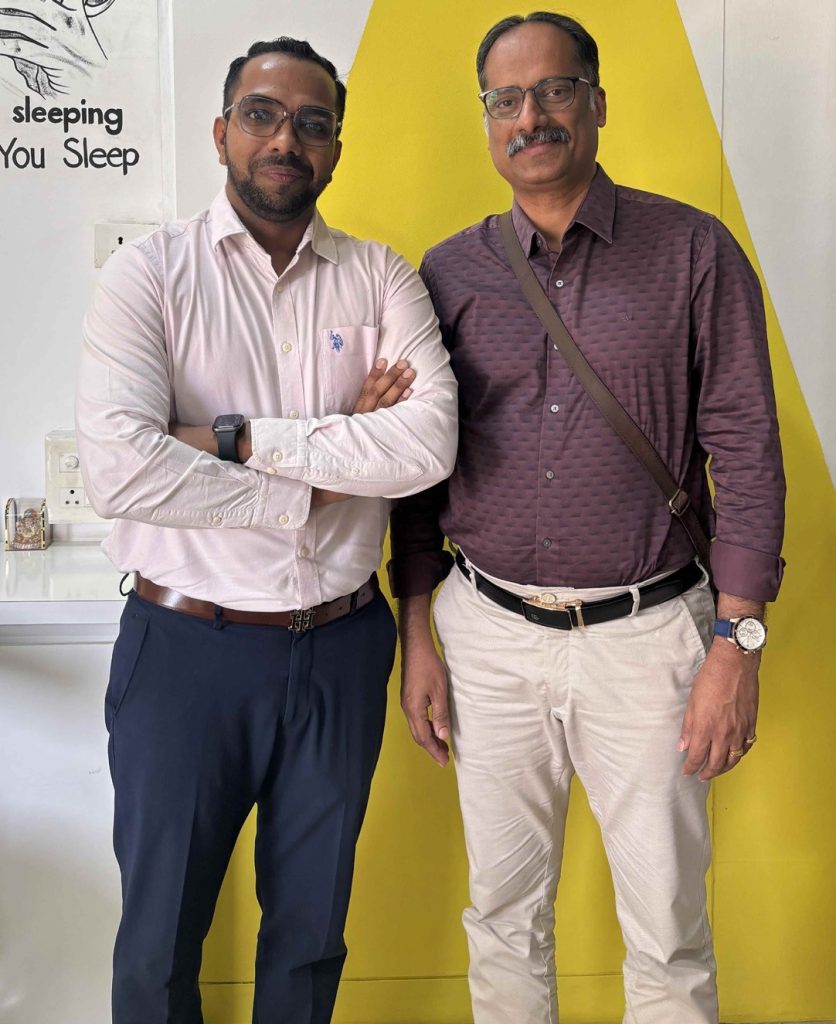
What followed was a discovery exercise rather than a sales process. Before proposing anything, the ElevatorPlus team worked through Rosh's operation department by department — sitting with each head individually, mapping how work actually moved through sales, installation, service, AMC, inventory and billing, and identifying where the handoffs between them were leaking time.
That distinction matters. A demonstration shows a buyer what software can do; a discovery establishes what this particular business needs it to do. Only after those workflows were understood did configuration begin. Twenty-two years of operating history had to be brought across, each department's process had to be reflected in the system rather than replaced by it and the rollout was worked through with the people who would actually use it every day.
Frances describes the approach in a single word: patience. "It's excellent software," he said. "The team has been excellent, with great patience coordinating with all our department heads during onboarding and execution."
Two years on, the operational picture looks different. Sales hands off to installation inside the same workflow. Installation feeds service. Service feeds AMC renewals. AMC feeds billing. Each department can see what the others are doing without picking up the phone. Six thousand lifts and 22 years of operating history sit behind a single view. The gain is less a new capability than the removal of an old friction — the coordination tax simply stops being paid.
Frances also points to something that does not show up in a product demonstration: “The product keeps getting new enhancements and updates that are genuinely required by the elevator industry.”
That last point describes the work that continues after a go-live, and it is where most software relationships in this industry quietly fail. A platform delivered and abandoned decays as the business around it changes. One that keeps absorbing what the industry throws at it — new compliance requirements, new customer expectations, new ways of working — compounds instead.
There is a broader point here for the industry. Most of the technology conversation in VT is about the lift itself: gearless machines, destination control, Internet of Things-enabled predictive maintenance. Far less attention goes to the business that owns the lift. Yet much of what a passenger actually experiences is decided in the back office, not the machine room: how quickly a breakdown is attended, whether the AMC lapsed unnoticed, whether the right spare was in stock when the technician arrived. Digitizing that layer is unglamorous work. It is also where a great deal of service quality, and therefore a great deal of safety, is quietly determined.
The Rosh experience suggests a corollary that technology vendors do not always like to state. Software did not give Rosh Elevators its discipline; 22 years of running a business did that. What the system did was stop that discipline from leaking out through the gaps between departments. The role of the partner, on this evidence, is less to transform a company than to understand it first — and then get out of the way of what it already does well.
المزيد من الفئة
أخبار يومية