
Digitale Transformation im vertikalen Transportwesen: Der Aufstieg datengetriebener Technik
By Prof. Dr. Gürkan Öztürk | Digitalisierung | Juli 13, 2026
9 Minuten zum Lesen
HÖREN SIE SICH DIESEN ARTIKEL AN
Elevator engineering is undergoing a shift from drawing-centric work to data-driven engineering as evolving standards, complex projects, and multidisciplinary teams demand rapid, traceable delivery of up-to-date calculations, product data, BIM objects, and lifecycle records. Cloud-based, CAD-less platforms enable simultaneous collaboration, instant standards updates, mobile access, QR-linked field data, and faster office-to-site communication. BIM integration, decision support tools, and digital twins extend value across design, installation, maintenance, and modernization, enabling predictive maintenance and consistent, comparable decisions. ELEport.io and ELECORE.io exemplify this transformation by consolidating design, calculations, BIM-compliant data, and multilingual documentation in the cloud and offering accessible standards-based decision support on mobile devices.
submitted by Prof. Dr. Gürkan Öztürk, ELEport Cloud Solutions
The elevator industry has a highly dynamic structure shaped by evolving needs, changing technologies, and constantly updated standards. The suite of directives, standards, and regulations directly impacts processes such as design, calculation, documentation, field applications, and lifecycle management.
In this dynamic environment, one of the most critical needs is the ability to quickly and accurately deliver up-to-date engineering information and regulatory changes to designers, manufacturers, installation companies, consultants, field teams, and project stakeholders. This is because, in elevator projects, making the right engineering decision is not limited to simply producing drawings; performing calculations in accordance with current standards, managing technical data in a traceable manner, and conveying the correct information to the field in a timely manner are equally important.
In the past, drawings were the primary carriers of project information. Today, however, an elevator project must be evaluated in conjunction with technical calculations, product data, BIM objects, technical documentation, field data, revision records, and lifecycle data that can be integrated into maintenance processes. This shift is transforming the industry from a drawing-centric work model to a data-driven engineering approach.
Consequently, there has been a growing need in the industry for cloud-based interactive software that can instantly apply current standards and engineering knowledge; manage complex calculation processes more effectively; and accelerate the flow of information across the project, site, and client sides. The ELEport.io and ELECORE.io platforms were developed to address this need and provide end-to-end support for digital transformation in elevator engineering.
The Transition from Drawings to Data
For many years, elevator projects were managed using files generated by various CAD-based drawing and modeling systems. However, as project complexity increased, the management of not only the drawings but also the engineering data that makes up the project began to take center stage.
Every revision meant a new file, every change meant a new share, and every review meant a new comparison process. In projects involving different disciplines, consultants, manufacturers, and field teams, accessing up-to-date information and working on the same data was not always easy.
One of the fundamental impacts of digital transformation is that project information is no longer a static structure stored solely within files. Today, the centralized management of project data—and the ability to reproduce it as drawings, reports, sections, 3D models, or technical outputs when needed—is becoming increasingly important.
This approach ensures that information in elevator engineering becomes more traceable, up-to-date, and shareable.
Why Has Cloud Architecture Become Critical?
Cloud architecture is often viewed merely as file storage or remote access. However, from an engineering perspective, cloud architecture carries a much broader significance.
Updating standards, developing calculation algorithms, managing product libraries, sharing project data simultaneously with different users, and enabling all stakeholders to work from the same up-to-date information are among the key advantages provided by cloud-based systems.
While delivering updates to users in traditional desktop applications requires specific processes, in cloud-based systems, users can work on the same up-to-date data structure. This is particularly important in engineering fields that rely on standards. This is because as calculation methods, product data, and project outputs are updated, all users must be able to access the same level of accuracy.
Cloud-based systems also enable teams working in different cities, countries, or disciplines to collaborate on shared project data. Thus, project management can be conducted not only through file sharing but also through the sharing of up-to-date data and traceable process management.
CAD-Less Approach: Access to Projects from Any Device
One of the key outcomes of digital transformation in the elevator industry is the ability to view and share project information without relying on CAD infrastructure. With its CAD-Less approach developed in this field, ELEport contributes to the management of project information not only through drawing files but also through digital engineering data.
In traditional setups, project data is mostly stored and shared via CAD files. This often requires specialized software, licenses, or technical infrastructure to view and track project information. This dependency can lead to time loss and communication difficulties, particularly for field teams, customers, or stakeholders involved in approval processes.
The core element of the CAD-Less approach is not the sharing of drawing files, but rather the centralized management of the digital engineering data that constitutes the project. Drawings, reports, cross-sections, technical documents, and 3D views can be generated from this data as needed.
Thanks to ELEport’s approach, projects can be viewed, reviewed, shared, and tracked across various platforms—including computers, tablets, and mobile devices—without the need for any CAD software or CAD infrastructure.
This system significantly streamlines the flow of information between the office, the field, clients, and approval processes. Project data created in the office can be viewed on-site via a mobile device, shared with clients, and evaluated by project stakeholders using data that can be updated in real time. Thus, project communication is evolving from the traditional model—which relies on sending and tracking drawing files—toward interactive and up-to-date data sharing.
Information Now Moves Faster Than Drawings
In engineering projects, ensuring that information reaches the field accurately is of critical importance. Using incorrect revisions, implementing outdated drawings, or misinterpreting technical details can lead to time loss, increased costs, and implementation errors.
Digital platforms are transforming the way project information is transferred from the office to the field. Thanks to QR codes, web links, mobile viewing tools, and cloud-based sharing systems, field teams can quickly access technical drawings, 3D models, and project details.
This approach not only speeds up installation processes but also improves communication quality, revision tracking, and the transparency of decision-making processes throughout the project. The ability for the same project information to be viewed consistently by the office, the field, the client, and management is one of the most tangible benefits of digitalization.
Incorporating Elevators into Building Information Modeling (BIM)
Building Information Modeling is becoming increasingly important in the elevator industry. Elevator systems are no longer viewed merely as equipment added to a building after the fact, but as an active component of the building’s digital information model.
Thanks to IFC-based data exchange, interdisciplinary coordination, clash detection, and LOD/LOI management, elevator projects can be addressed alongside other building disciplines as early as the design phase. This helps reduce revisions that might arise during the construction phase and contributes to improving project quality.
The BIM approach also enables the geometric and technical data of the elevator system to be utilized throughout the building’s lifecycle. Thus, the information generated during the design phase retains its value not only at project handover but also during maintenance, modernization, and operation processes.
Decision Support Systems in Engineering
One of the significant contributions of digitalization to engineering processes is the development of decision support systems.
In traditional methods, many sizing and layout decisions are made based on engineers' knowledge and experience. Today, however, systems supported by standards, databases, and algorithms can evaluate alternative solutions much more quickly.
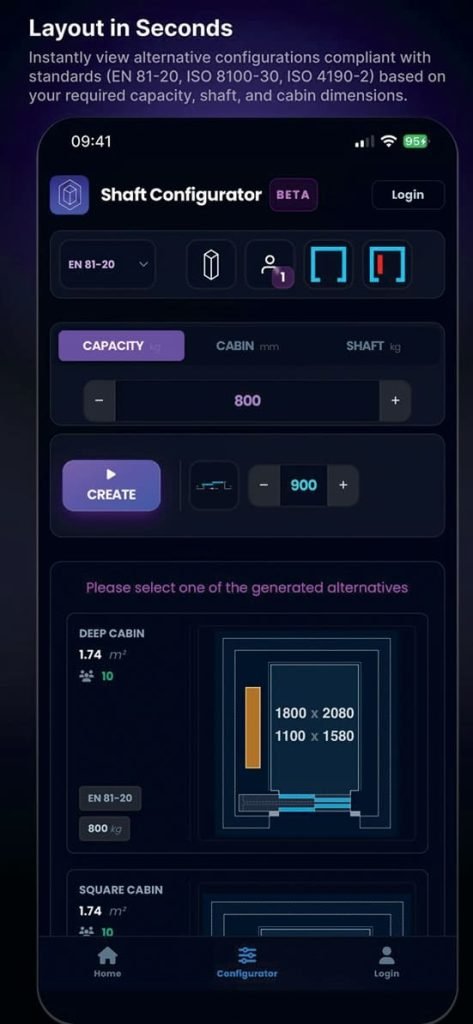
In particular, analyzing capacity, cabin, and well relationships, creating alternative layout scenarios, and proposing standards-compliant solutions offer significant advantages in the early design phases. ELECORE.io delivers this approach through a platform that is accessible to everyone and available in multiple languages, enabling users to quickly evaluate standards-compliant alternative well solutions.
This approach not only reduces design time but also helps make engineering decisions more consistent, comparable, and traceable.
Digital Twin and Lifecycle Management
Digital transformation is not limited to the design phase alone. Managing the design, production, installation, commissioning, maintenance, modernization, and operation processes of elevator systems through a single digital data chain is one of the areas the industry will focus on more in the coming period.
The digital twin approach is based on the concept of creating a digital counterpart of a physical system and using this model to monitor performance, maintenance, and operational data. This makes it possible to analyze historical data, plan maintenance processes more effectively, and manage system performance more efficiently throughout its lifecycle.
With the advancement of data collection, analysis, and modeling methods, the widespread adoption of predictive maintenance applications and the evaluation of systems based on their actual operating conditions have become possible.
Data Management: A New Competitive Frontier
Elevator engineering is no longer limited to simply producing drawings. Today, projects are evolving into comprehensive digital structures managed alongside calculations, BIM data, product information, technical documentation, field processes, and lifecycle data.
Cloud architecture, CAD-less workflows, BIM integration, decision support systems, and digital twin technologies are becoming the key components shaping the industry’s future.
In the coming period, the key to gaining a competitive advantage will not merely be producing drawings faster, but rather making engineering knowledge accessible, shareable, traceable, and manageable throughout the entire project lifecycle.

ELEport’s Contribution to Digital Transformation in Vertical Transportation
The need for digital transformation in the elevator industry is not limited to simply migrating existing processes to a digital environment. The primary goal is to create sustainable digital structures where engineering data can be managed throughout its lifecycle, shared among different stakeholders, and used in compliance with standards.
Driven by this need, the foundations of ELEport were laid in 2018 at Istanbul University Technopark. Initial efforts focused on digitizing the technical calculation processes used in elevator engineering, and later expanded into the areas of cloud-based 2D/3D design, data management, and BIM integration.
Development activities subsequently continued at the Eskişehir Anadolu Technology Research Park; R&D efforts, carried out with contributions from universities, industry professionals, and software teams, were further strengthened by TÜBITAK-funded projects. As a result of these successfully completed efforts, the resulting platform has evolved beyond being merely a drafting or calculation software to become a cloud-based platform that supports a digital engineering approach.
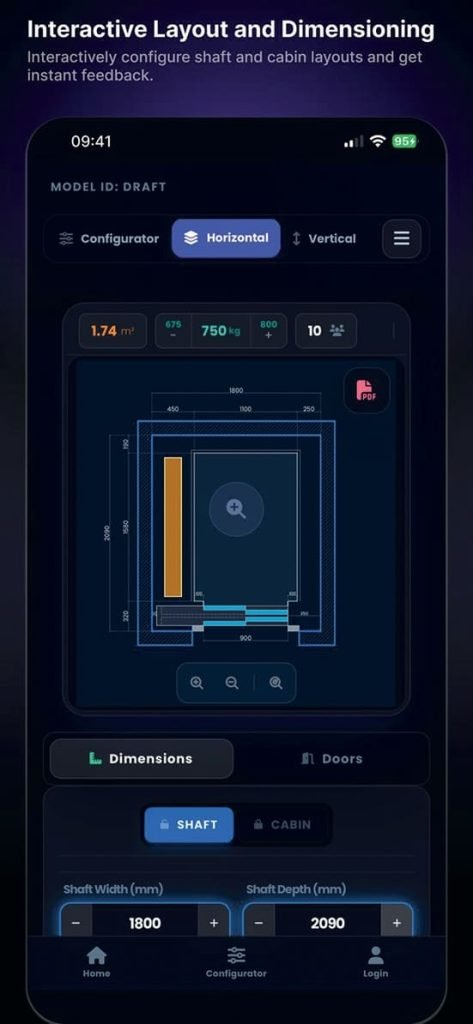
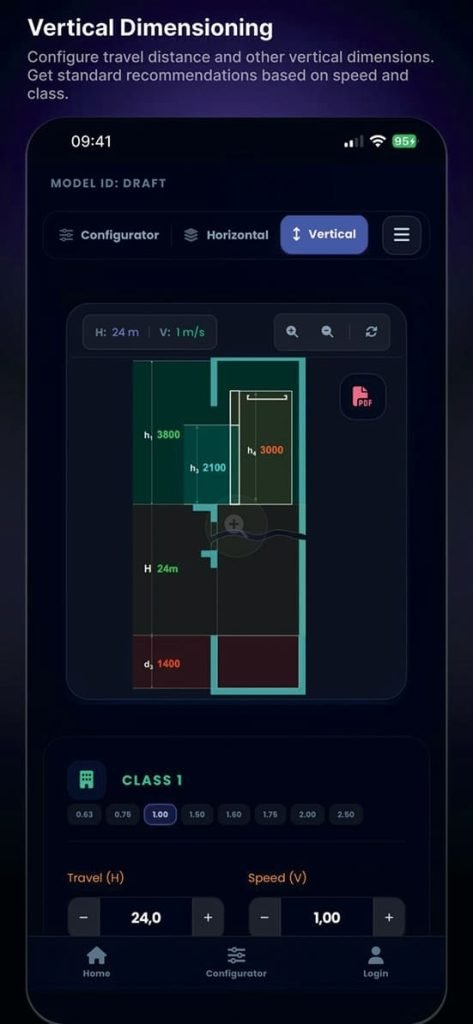
Today, ELEport.io brings together processes such as 2D/3D design, technical calculations, BIM-compliant data generation, multilingual documentation, and digital project sharing within a single cloud infrastructure. ELECORE.io, meanwhile, makes its decision-support approach—which evaluates capacity, cabin, and well relationships according to standards—accessible to a broader user base. As a platform open to everyone and available in multiple languages, ELECORE.io enables users to evaluate capacity, cabin, and well relationships within the framework of standards via iOS and Android apps, allowing them to generate alternative layout scenarios in a matter of seconds.
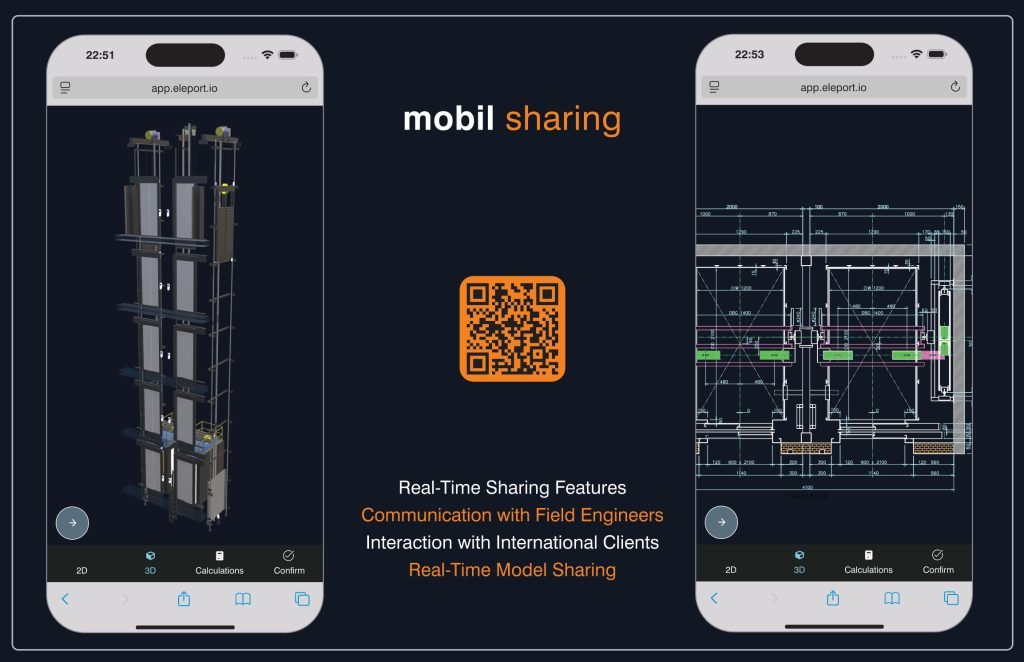
In particular, the ability to share engineering data among offices, field sites, clients, and project stakeholders within seconds—thanks to its cloud architecture and CAD-less workflow approach—stands out as one of the most tangible contributions of digital transformation to the sector. This approach contributes to the development of a more accessible, connected, and efficient engineering workflow model in the vertical transportation sector.

MEHR AUS DIESER KATEGORIE
NACHRICHTEN