
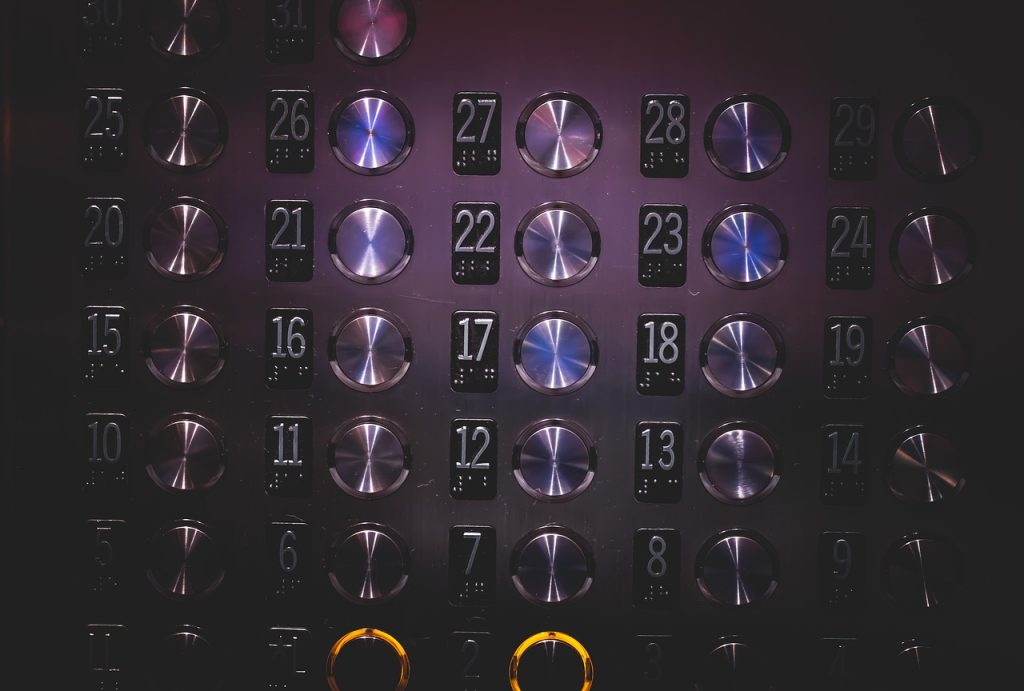
Journée mondiale du braille is celebrated on January 4 in honor of its creator Louis Braille, who was born in France on that date in 1809. Described as a "code" and a "tactile representation of alphabetic and numerical symbols," braille utilise six points pour représenter des lettres et des chiffres, ainsi que des symboles musicaux, mathématiques et scientifiques. Pour les personnes aveugles ou malvoyantes, le braille est essentiel pour lire, écrire et naviguer dans leur vie quotidienne.
Robley G. Cook, fondateur de Produits d'ascenseur SCS, pioneered the use of braille in U.S. elevators in the mid-1970s. A visually impaired individual himself, Cook was keenly aware of the need for directional braille signage. He created a line of braille products for elevator applications and approached manufacturers with his invention. Cook's metal-stamped braille signs were well received, but there was no requirement to include braille signage until the Americans with Disabilities Act (ADA) was passed in 1990.
Today, all lifts have both raised numerals and braille below or next to the floor numbers on the control panel. A tactile star with braille is also required on both door jambs at the main entry level. Emergency information such as "In Case of Fire" signs must be displayed for an elevator to be ADA-compliant.
Certaines sociétés d'ascenseurs s'efforcent d'offrir une accessibilité et une indépendance améliorées aux personnes à mobilité réduite ou ayant une déficience visuelle ou un handicap. Les nouvelles technologies de transport vertical (VT), notamment l'Internet des objets et systèmes de répartition des destinations, make it possible for elevators to recognize individual passengers' needs. The ability to provide custom operations, such as keeping doors open longer, reserving additional space in the car or providing visual and audio cues, goes beyond current ADA requirements, marking another turning point in elevator accessibility.