
Como as caixas-pretas estão mudando o Elevator World
By Marco Cogliati | Manutenção | 31 de julho de 2026
Tempo de leitura: 7 minutos
OUÇA ESTE ARTIGO
Elevators are becoming intelligent, connected systems driven by discreet black boxes that do more than record events; they gather sensor data on position, speed, vibrations, temperature and power to enable preventive and predictive maintenance. Real-time analysis and machine learning detect degradation, reduce downtime, optimize interventions and improve safety, efficiency and sustainability while lowering spare parts waste. Deployments in hotels, residential and public buildings show fewer breakdowns and higher customer satisfaction. Challenges include data security, retrofitting older lifts, and lack of interoperable standards. The technician role shifts from checklist executor to data-savvy diagnostician, requiring new training. Future boxes may add automated diagnostics, AR support and tighter integration with smart building systems.
A manutenção do futuro
by Marco Cogliati
In the world of vertical mobility, technology is no longer just a simple ally: It has become the very engine of innovation. Elevators, which have always been a symbol of mechanical reliability and engineering precision, are transforming into intelligent and connected systems. At the heart of this transformation, in addition to innovations in increasingly digitalized control panels, we find a device that is as discreet as it is revolutionary: the "black box."
Far from the passive role that has made them famous in the aeronautical field, elevator black boxes do not limit themselves to recording events. On the contrary, they are tools for analysis, prevention and continuous diagnosis, designed to anticipate failures, optimize interventions and, ultimately, make plants more efficient, reliable and sustainable over time.
The principle behind it is as simple as it is powerful, i.e., to equip the installation with a series of intelligent sensors capable of collecting real-time data on all the main operating parameters. This data, processed locally or transmitted to cloud platforms, becomes the basis of a new approach to maintenance: no longer reactive or periodic, but preventive, predictive and targeted.
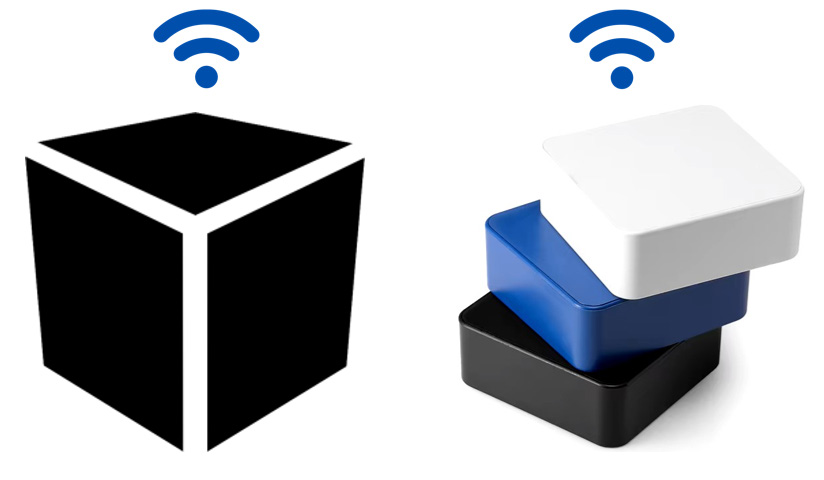
A “Talking Elevator”
The introduction of advanced sensors allows elevators to "talk." Every movement of the car, every change in speed, every vibration or deviation from normal values is detected, analyzed and archived. Modern black boxes collect information on a wide range of variables: from the precise position of the car in the hoistway at all times to speed and acceleration, passing through the temperature of the shaft, the car and the engines, the electrical consumption, the presence of shocks or abnormal stresses up to the more integrated ones — the error codes coming from the control system.
The result is a dynamic and constantly updated picture of the status of the plant. A maintenance technician who accesses this data can know in advance the behavior of the elevator, identify the symptoms of a malfunction and plan a targeted intervention before a failure occurs.
From Reactive Maintenance to Preventive/Predictive Maintenance
Traditionally, elevator maintenance has been organized according to a fixed-interval logic. Scheduled visits, standard checks, replacement of components if necessary or according to pre-established cycles. Nevertheless, this methodology, although consolidated, does not take into account the actual state of the installation, nor, in most cases, the actual use of the same.
An elevator in a residential building with moderate traffic has very different needs from one in a shopping mall, which operates for tens of thousands of monthly trips. With the introduction of black boxes, maintenance can finally be "tailor-made," calibrated on the real conditions of the individual system.
Through the analysis of the data collected, dedicated computer systems can signal the degradation of a component in advance, suggest the replacement of a part before it breaks, or simply indicate that a scheduled intervention can be postponed without risk. It is a flexible, scientific and, above all, extremely effective approach to preventing plant downtime.
Efficiency, Safety, Sustainability
The advantages are many. First, it reduces downtime. A sudden breakdown, especially in buildings with high traffic density, can cause significant inconvenience, impact productivity and even create safety problems. By preventing malfunctions and constantly monitoring the availability of the system, service increases and becomes more continuous and reliable.
Second, operational efficiency improves. Technicians can organize interventions with greater precision, intervene with the necessary parts already available and reduce on-site diagnostic time. This makes maintenance more efficient, more effective and more appreciated by the customer.
In addition, greater company efficiency can also be positively assessed, linked to the warehouse stocks of spare parts and the organization of time for technicians engaged in the field.
Then there is an environmental aspect to consider. Smarter maintenance also means more sustainable management of resources: less waste of components, lower energy consumption thanks to systems that are always well calibrated and a longer life cycle for the entire system.
Data at the Heart of Decision-Making
The heart of everything is the data. Every second, every system equipped with a black box generates hundreds of pieces of information. However, the real value arises when this data is aggregated, historicized and analyzed on a large scale through specific algorithms.
Modern predictive management platforms exploit machine-learning algorithms to recognize recurring patterns, statistical anomalies and correlations between events. For example, it may emerge that a certain type of vibration during door opening in a given elevator model is frequently a precursor to a failure in the leveling system or that the rise in temperature in a hydraulic power unit above a certain value, followed by a peak in electricity consumption, anticipates a pump failure.
This type of analysis, which is impossible with traditional tools, allows you to move from simple responsiveness to prediction. It is no longer just about knowing that something is not working, but about knowing when it might stop working and, more importantly, why.
A Concrete Impact on the Field
A concrete example can help you understand the impact of these new technologies. Let us imagine a network of systems installed in a large hotel group. In the past, maintenance management was based on fixed monthly cycles and reactive interventions in the event of customer referrals.
With the introduction of black boxes, the company can monitor all systems in real time, receive automatic notifications in case of anomalies and view weekly reports on the status of each lift. The result? A significant reduction in unexpected breakdowns and plant downtime in the first year and a clear improvement in end customer satisfaction.
Similar results have also been observed in the residential sector and in the management of public buildings. The difference is made by the timeliness of information and the ability to transform it into concrete action.
Critical Issues Not To Be Underestimated
Of course, no technology is free from criticalities. The adoption of black boxes requires serious reflection on several aspects.
First of all, with data security, for the transmission and storage of information, it is necessary to adopt specific protocols, secure authentication systems and clear policies on access to data by technicians, companies and end users.
Second, compatibility with existing systems must be considered. Not all elevators, especially older ones, are designed for the installation of telemetry devices. The goal, in the simplest cases, is achieved by adding interface control units; in some, however, significant changes are required, which in most cases means the complete replacement of the control panel with the related impacts related to time and costs.
Finally, a topic that is still open is that of standardization. The lack of shared protocols between the various manufacturers of digital systems limits interoperability and risks fragmenting the market. For some years now, standardization bodies (European and international) have been organizing themselves in the drafting of technical documents that aim to clarify the applicability of these technologies, favoring interoperability between the various systems.
"Maintenance Technician Wanted!!" - A New Role for the Elevator Technician
In recent years, companies in the sector have struggled with finding technical personnel to join their staffs. The lack of new resources to integrate the outgoing generations is an increasingly felt problem.
The introduction of black boxes is not only a technological issue, but also a cultural one. The role of the maintenance technician changes profoundly: from an operational technician to a diagnosis professional, from a checklist executor to a data interpreter.
This requires new skills: ability to read trends, knowledge of information systems and familiarity with digital tools. Companies in the sector are called upon to invest in training and continuous updating so as not to leave behind fundamental professional figures.
At the same time, the value of maintenance as a service with a high technical content, capable of generating value for the customer and actively contributing to the safety and efficiency of real estate assets, is growing.
Olhando para o futuro
The evolution does not stop there. The next generations of black boxes will probably integrate increasingly advanced functions: automatic diagnostics, voice assistance, AR/VR interfaces for remote support and perhaps even self-configuration or autonomous learning capabilities.
In the not-too-distant future (perhaps already today?), the elevator could become an active node of the smart building: capable of dialoguing with other systems (air conditioning, security, energy management), of optimizing traffic flows based on the real presence of people and of dynamically adapting to environmental conditions.
However, to get there, it is necessary today to make far-sighted choices. Equipping systems with advanced diagnostic tools, such as black boxes, is the first step toward a new idea of maintenance: no longer just an obligation to be fulfilled, but a strategic opportunity to build value, trust and innovation.
MAIS DA CATEGORIA
NOTÍCIAS DIÁRIAS