
Mirando más allá de lo obvio: un potencial sin explotar
By Vijay Pandya | Descripción general del editor El | Julio 31, 2026
2 minuto de lectura
ESCUCHA ESTE ARTÍCULO
Elevator and escalator technology has transformed from a narrow set of standardized offerings into a dynamic spectrum driven by rapid advances and changing building demands. Conversations now extend beyond speed and stops to smart systems, connected intelligence, energy performance and diverse applications. Predictive maintenance, intelligent dispatching, regenerative drives and touchless interfaces quietly reduce friction while improving reliability, efficiency and adaptability. Demand now spans high-rises, low-rise residences, infrastructure, accessibility solutions and space-constrained projects, requiring tailored, context-driven systems. As choices multiply, stakeholders must prioritize integration, cybersecurity, life-cycle performance and service readiness, applying technology with purpose so mobility becomes smarter without becoming needlessly complex.
Por Vijay Pandya
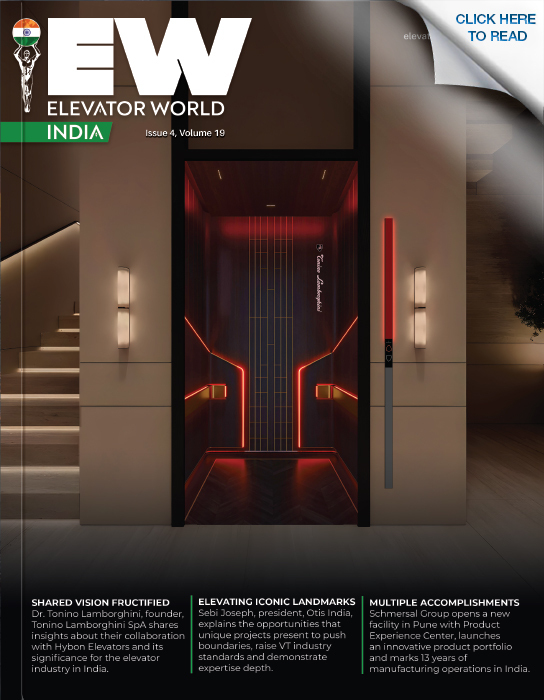
Everything about elevators and escalators has changed or transformed over the years. From perception to planning, implementation to usage, every aspect has undergone a metamorphosis. This visible shift is reflected in the focus topic of this ELEVATOR WORLD India magazine issue, "VT Technology Advances & Spectrum Expansion," and in the content by our panel of expert writers.
Vertical transportation (VT) is no longer defined by a narrow set of solutions. What was once a largely standardized offering is now expanding into a broad and dynamic spectrum that is driven by rapid technological advances and the evolving demands of modern buildings. Today, the conversation is no longer limited to speed, stops and specifications. It spans smart systems, connected intelligence, energy performance and a rapidly widening range of applications. VT, in short, has become far more interesting and far more consequential.
Technology has become the clear catalyst of this transformation. Predictive maintenance, intelligent dispatching, regenerative drives and touchless interfaces are quietly transforming how elevators and escalators operate behind the scenes. These advances are not about adding complexity; they are about removing friction. This shift is not about novelty; rather, it is about reliability, efficiency and systems that can adapt as buildings and usage patterns evolve.
Alongside these advances, the spectrum of VT applications is widening rapidly. High-rise towers may still dominate the skyline, but they no longer define the entire market. Low-rise residences, infrastructure projects, specialized accessibility solutions and space-constrained developments are all shaping demand. The result is a portfolio of VT solutions that must be as flexible as the environments they serve — i.e., tailored, contextual and purpose-driven.
With opportunity comes responsibility. As technology choices multiply, so do expectations around integration, cybersecurity, life-cycle performance and service readiness. Stakeholders must move beyond feature-driven decisions to focus on fit-for-purpose systems that deliver long-term value. The emphasis must remain on thoughtful adoption where technology enhances mobility without complicating it.
This issue explores how technology advances and spectrum expansion are redefining VT — not through spectacle, but through smarter choices and sharper intent. Because as vertical mobility becomes more intelligent and more diverse, the real differentiator will not be who adopts the most technology, but who applies it with purpose. In an industry built on movement, progress will belong to those who know exactly when to innovate and when to keep it elegantly simple.
MÁS DE LA CATEGORÍA
NOTICIAS DIARIAS