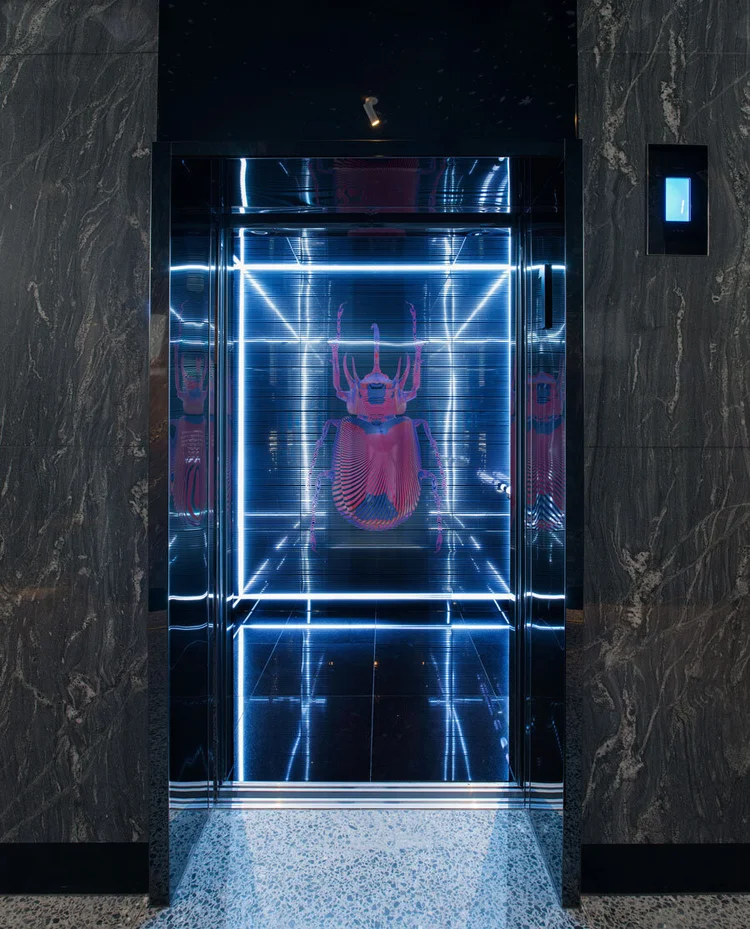
El caso de invertir en la estética del ascensor
By kathleen farell | Diseño | Septiembre 22, 2025
2 minuto de lectura

An artículo in September's issue of ELLE DECOR entitled "It's Time To Bring Back the Chic Elevator" makes the case for vertical transportation as an important design element. The author laments that today's elevators are primarily functional when they once served as an essential transitional space, smoothing the aesthetic shift between a building's lobby and hallways. He cites the Art Deco doors of the Chrysler Building elevators and the woven metal mesh cabs in the Seagram Building as examples of lifts being treated as architectural marvels.
Quoted in the article is Jonathan Baron, a New York interior designer, who says that elevators are the most intimate experience one has in a building. Baron notes that the developers he works with are eager to talk about the design of the lobby and hallways, but the elevator is usually put off until the end of a project when its budget is depleted. The author notes that the decline of unique design choices can also be linked to the long life of elevators. Clients typically choose neutral elevators that won't conflict with any interior design updates to the lobby and halls in years to come.
La opinión pública también influye. A finales del siglo XIX, cuando los ascensores se popularizaban en Estados Unidos, se diseñaron para que parecieran salas de estar de apartamentos y así mantener a los pasajeros tranquilos y cómodos. A medida que los ascensores se volvieron eléctricos, lo que resultó en menos tiempo en la cabina, y la gente se acostumbró a la tecnología, la necesidad de una decoración elaborada disminuyó.
That doesn't mean that elevator aesthetics are a thing of the past. Custom cabs are still being designed and built today by developers who value their design impact. The W-Hotel chain has strategically chosen to install Taxis inesperados y visualmente impactantes Para animar a sus huéspedes a tomarse selfis en el ascensor, lo que resulta en promoción gratuita. Quizás, como sugiere el autor, la inspiración para un renacimiento del diseño de ascensores deba provenir de quienes los utilizan.