
Offriamo soluzioni di mobilità verticale innovative, all'avanguardia e affidabili.
By Shilpa Pandya | Dialogo di settore | Luglio 31, 2026
7 minuti di lettura
ASCOLTA QUESTO ARTICOLO
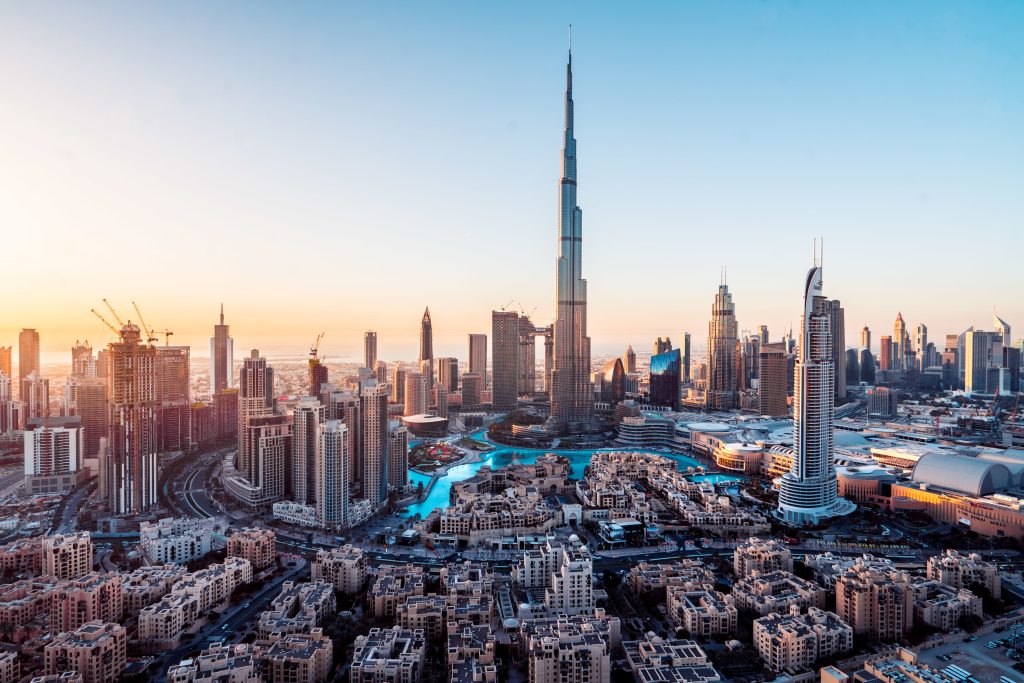
Otis India’s delivery of vertical transportation for The Prestige Mumbai unites two market leaders and reinforces a 130-year legacy of innovative, reliable solutions. The project sets a new benchmark for safety, speed, efficiency, passenger experience and building performance through India’s fastest 10 m/s SkyRise elevators, the country’s first double-deck cars paired with Otis Compass 360 destination management, and ReGen drive energy recovery. The SkyBuild self-climbing system improves construction logistics and converts to permanent high-rise service. Framing elevators as part of the workplace experience, Otis highlights smart features such as eCall and predicts rising demand across grade-A offices, ultra-luxury residences, mixed-use developments and infrastructure as Indian cities grow taller, with Otis helping to shape that future.
Sebi Joseph (SJ), presidente di Otis India, condivide con l'autore di questo articolo (SP) alcune considerazioni sulla fornitura di servizi di verifica della fattibilità per progetti di rilievo.
di Shilpa Pandya
SP: What is the significance of Otis India providing vertical transportation (VT) for a landmark project like The Prestige, Mumbai?
SJ: This association is significant on multiple fronts. At its core, it brings together two market leaders in their respective industries: Otis and our longstanding customer, The Prestige Group. For Otis, this is a powerful endorsement of the confidence our customers in India place in us, built through more than 130 years of delivering innovative, cutting-edge and reliable vertical-mobility solutions in the country.
Equally important is the landmark nature of the project itself. The Prestige Tower in Mumbai is poised to become an iconic addition to India's urban landscape and a symbol of the country's growing global stature.
This collaboration establishes a new benchmark for the Indian real estate sector. It will redefine expectations for safety, speed, efficiency, passenger experience and building performance, while setting a precedent for the future of vertical urban development in India. We believe this project will serve as a reference point for the industry for years to come and reinforce India's position as a leader in creating world-class urban destinations.
SP: How would you describe the unique selling points (USPs) of the VT provided by Otis India in The Prestige, Mumbai, and the way it redefines how people move within it?
SJ: This project showcases advanced engineering, smart mobility and sustainable urban design. Through our VT solutions, we are moving people from one floor to another and helping shape the future of how people experience the world's most advanced buildings.
The innovation behind this project is anchored in three pillars:
- India's fastest elevators: The deployment of our 10 m/s Otis SkyRise® elevators represents a new benchmark for India's high-rise vertical mobility. For visitors and occupants of The Prestige Tower, journeys to the upper floors and observation deck will deliver a world-class experience comparable to some of the most iconic skyscrapers globally.
- India's first double-deck elevator: By operating two elevator cars within a single hoistway, passenger handling capacity is increased significantly, enabling smooth and fast journeys, and maximizing space throughout the tower. When combined with our Otis Compass 360™ destination management system, which intelligently groups passengers traveling to similar destinations, the installation will lead to shorter wait times, fewer stops and a smoother flow of people throughout the building.
- Superior passenger experience: Every aspect of the elevator experience has been engineered for exceptional comfort, so passengers always enjoy a remarkably smooth, quiet and refined ride. At the same time, our Otis ReGen™ drive technology recaptures energy generated by the elevator and returns it to the building's grid.
SP: What were the key challenges and opportunities for Otis India vis-à-vis providing VT in The Prestige, Mumbai?
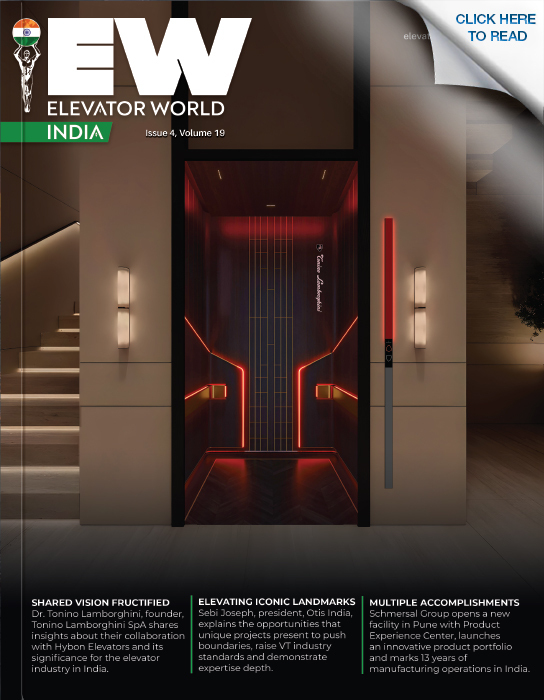
SJ: Every landmark project presents its own unique challenges. But at Otis, we see these moments as opportunities to push boundaries, raise industry standards and demonstrate the depth of our expertise.
For example, this project also marks the first installation in India of the Otis SkyBuild™ self-climbing elevator solution. This is designed to improve logistics efficiency for on-site work crews and safely transport people and materials during the build phase. Once construction is complete, the system converts into permanent service as an Otis SkyRise® high-rise elevator.
It gives us the opportunity to bring our global expertise in high-rise buildings to India while developing world-class local capabilities and specialized talent.
SP: Why is it important that VT is not treated just as infrastructure, but as an integral part of the workplace experience in office buildings?
SJ: Elevators play a critical role in shaping the overall occupant experience.
In today's commercial real estate market, VT is central to a building's efficiency, productivity and tenant satisfaction. Long wait times and congestion in older systems create friction, while intelligent systems such as Otis Compass 360 help deliver a more seamless and intuitive experience that enhances the flow of people and contributes to a more efficient workplace.
As buildings become smarter and more connected, solutions like Otis eCall™ allow users to call an elevator from their smartphone, enabling a convenient and touchless experience that aligns with modern expectations around comfort, convenience and well-being.
Ultimately, a building's VT system reflects its overall quality. It signals a developer's commitment to innovation, operational excellence and creating exceptional experiences for occupants and visitors.
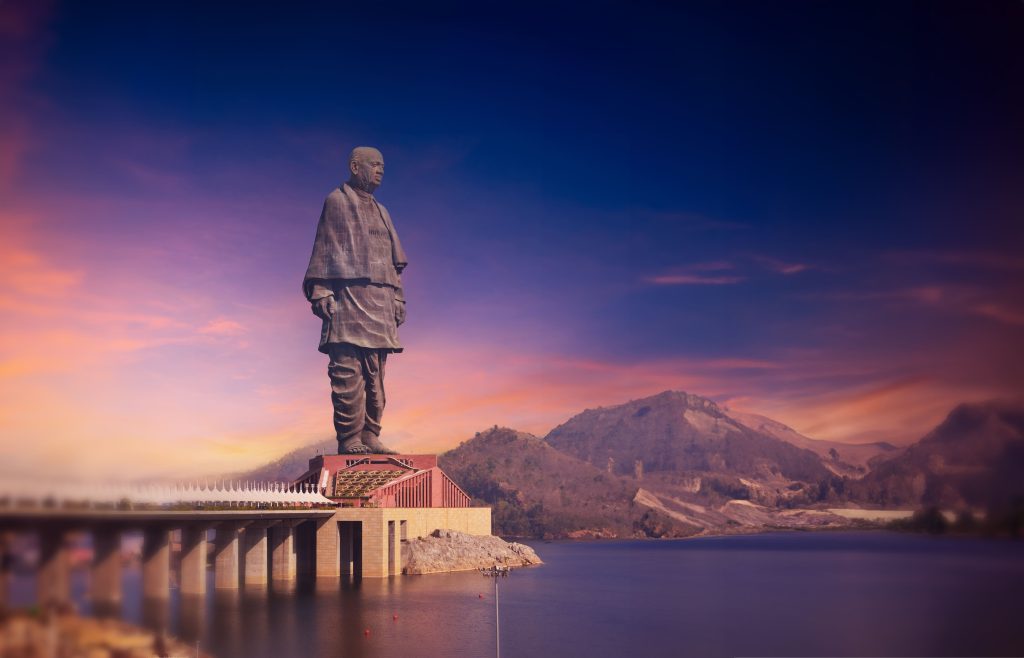
SP: Otis India has been associated with many landmark projects including the Statue of Unity. How does that reflect upon the brand's lineage and trust across India and the globe?
SJ: For more than a century in India, we have built a legacy based on reliability, responsive customer service and performance. Whether it is moving millions of visitors through a national landmark or enabling seamless mobility in a next-generation skyscraper, our responsibility remains the same: to provide customers with vertical-mobility solutions that deliver the highest standards of safety, quality and passenger experience. That enduring trust is what continues to define the Otis brand in India and around the globe.
Our association with some of India's most iconic landmark structures is a testament to this trust that Otis has earned over generations. From the Statue of Unity and Raj Bhawan (Kolkata) to The Prestige Tower and High-Speed Rail Network, we have been proud to contribute to projects that are symbols of progress, innovation and national pride. Being chosen to equip such structures reflects confidence in our commitment to safety, efficiency, engineering excellence and delivering customized solutions for complex and high-profile buildings.
SP: Which VT categories do you see being the key demand drivers for high-speed, smart technology-driven elevators for Otis in India?
SJ: As India's skyline evolves, VT is becoming a critical differentiator in how modern buildings are designed, operated and experienced. Demand for advanced VT solutions is growing rapidly across four key sectors: grade-A commercial offices, ultra-luxury residential towers, mixed-use developments and large-scale infrastructure projects such as airports and metro networks. Customers in all four sectors are seeking safe, smarter, faster and highly efficient vertical-mobility solutions that enhance occupant experience and maximize building performance.
SP: Do you envisage high rises in major Indian metros becoming even taller going forward and further increasing the scope for high-end elevators?
SJ: Absolutely. As India's major cities continue to urbanize and land becomes increasingly scarce, vertical development is a necessity to create taller, smarter and faster cities. We are already seeing a shift from conventional high-rises to even taller buildings, particularly in key markets such as Mumbai, Delhi National Capital Region, Bengaluru and Hyderabad.
This evolution will significantly increase demand for safe, swift and intelligent VT systems. As buildings grow taller, elevators become even more critical to a building's functionality, efficiency and occupant experience. Technologies such as high-speed elevators, intelligent destination dispatch and double-deck systems will increasingly become the standard.
At Otis, we are not simply responding to this trend, we are helping shape it. Projects like The Prestige are an exciting view of the future of India's urban landscape and the role vertical mobility will play in enabling it
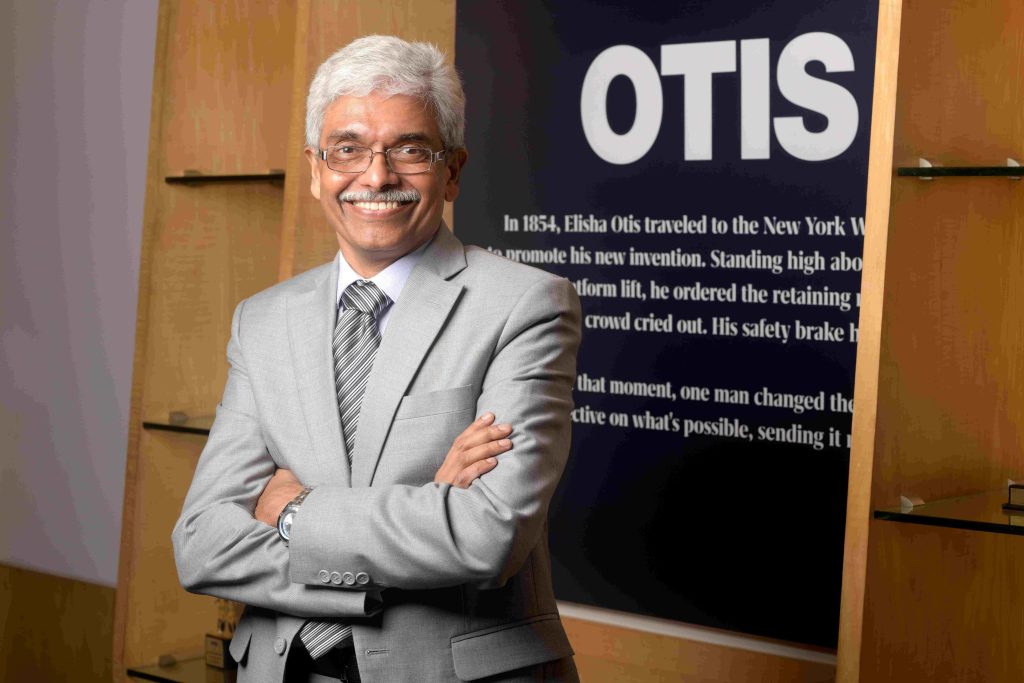
A proposito di Sebi Joseph
Sebi Joseph was appointed president of Otis India in November 2015. He is responsible for the overall leadership and strategy for Otis India, Sri Lanka, Bangladesh and Nepal. Prior to this he served as the managing director of Otis India since March 2012.
Joseph has been with Otis since 1987. He started his career with Otis India as an engineering trainee and continued to hold various positions of increasing responsibility, including general manager (GM), Karnataka operations.
From 2003 to 2007, he was president and GM of Otis Philippines and in 2008 he was appointed director, Marketing, Sales and Communications for Otis South Asia Pacific and Gulf Area.
In 2009, Joseph was named GM, U.A.E. and was appointed area director, Gulf Region, in 2011.
Joseph was the chairman of the Elevators and Escalators Division – Indian Electrical and Electronics Manufacturers’ Association (IEEMA) from September 2015 for five years.
Joseph was featured in the ELEVATOR WORLD – The People Issue 2023. EW has been recognized as the unequivocal premier publisher for the global VT industry for the last 70 years.
Joseph was conferred the Lifetime Achievement Award by The Economic Times, EY and Smart Lift and Mobility World in 2026.
He holds a bachelor's degree in mechanical engineering from the National Institute of Technology Kozhikode in Kerala.
ALTRO DALLA CATEGORIA
NOTIZIE DEL GIORNO