
Sistemi di ascensori intelligenti del futuro con intelligenza artificiale, Internet delle cose e integrazione BIM
Di Volkan Murat | Digitalizzazione | Luglio 13, 2026
8 minuti di lettura
ASCOLTA QUESTO ARTICOLO
La trasformazione digitale sta convertendo gli ascensori in sistemi basati sui dati, dove intelligenza artificiale, IoT e BIM consentono il monitoraggio continuo dei sensori, la manutenzione predittiva e la creazione di gemelli digitali. I dati in tempo reale relativi a motore, freni, porte e vibrazioni permettono all'apprendimento automatico di rilevare anomalie, ottimizzare i tempi di manutenzione e ridurre i costi, generando un risparmio netto annuo di circa 31,290 dollari per un portafoglio di 14 ascensori, oltre a una riduzione del 40% dei costi di guasto, del 60% dei tempi di inattività e un'ottimizzazione della forza lavoro del 15%. L'intelligenza artificiale consente inoltre chiamate personalizzate e l'ottimizzazione del traffico, mentre gli azionamenti rigenerativi e la gestione energetica basata sull'IA possono ridurre i consumi dal 20 al 40%. I gemelli digitali integrati con il BIM migliorano la gestione del ciclo di vita e la sicurezza, consentendo diagnosi più rapide e flussi di lavoro di emergenza automatizzati, trasformando gli ascensori in risorse attive di supporto alle decisioni per l'edificio.
presentato da Volkan Murat ORAKCI, ingegnere R&D di Merih Elevator
1. introduzione
Per molti anni, le tecnologie per ascensori si sono concentrate sullo sviluppo di sistemi meccanici ed elettromeccanici. Tuttavia, la trasformazione digitale dell'ultimo decennio ha iniziato a modificare significativamente le priorità del settore e, oggi, le prestazioni di un sistema di ascensore non possono essere valutate esclusivamente in base a criteri come la capacità di carico, la velocità o il comfort. I costi operativi, l'efficienza energetica, la gestione dei processi di manutenzione e l'esperienza dell'utente sono ora considerati altrettanto importanti quanto le prestazioni tecniche.
Dal punto di vista degli ingegneri che operano sul campo, è risaputo che i fermi macchina non pianificati rappresentano uno dei problemi più significativi riscontrati durante l'intero ciclo di vita di un ascensore.
I guasti imprevisti, soprattutto negli edifici commerciali ad alta frequentazione, non solo aumentano i costi di manutenzione, ma hanno anche un impatto diretto sul funzionamento degli edifici stessi. Per questo motivo, negli ultimi anni il settore ha spostato la propria attenzione da approcci reattivi alla gestione dei guasti a soluzioni volte a prevederli in anticipo.
L'intelligenza artificiale (IA), l'Internet delle cose (IoT) e le tecnologie di Building Information Modeling (BIM) sono diventate componenti chiave di questa trasformazione quanto mai necessaria. Grazie ai progressi nella tecnologia dei sensori, in particolare, è ora possibile raccogliere continuamente dati dai sistemi di ascensori; questi dati possono essere analizzati per ricavare informazioni significative sul comportamento delle apparecchiature.
Questo studio esamina, da una prospettiva ingegneristica, i contributi che queste tecnologie possono apportare ai sistemi di ascensori, le applicazioni attuali e le potenziali opportunità future.
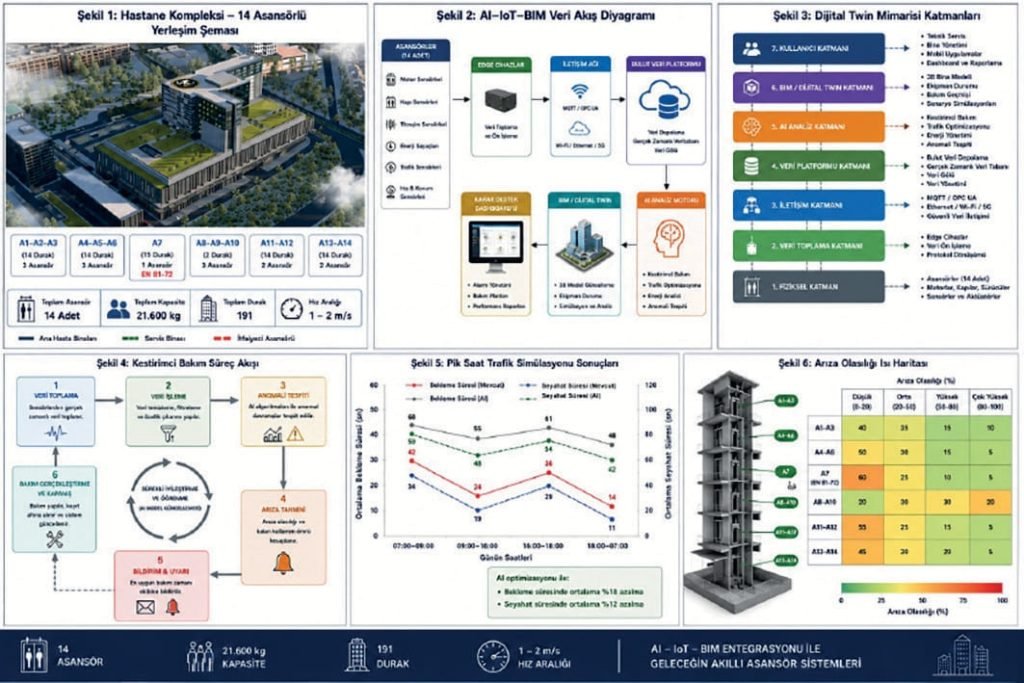
| Gruppo ascensore | Pezzo | Standard | Struttura in acciaio dell'albero | Misura dell'albero (mm) | MR/MRL | Velocità m/s | Numero di fermate | Capacità (kg) |
| LA1-LA2-LA3 | 3 | UNI EN 81-20/50 | Si | 7400 × 3600 | MR | 2.0 | 14 | 1600 |
| LA4-LA5-LA6 | 3 | UNI EN 81-20/50 | Si | 7400 × 3600 | MR | 2.0 | 14 | 1600 |
| A7 | 1 | EN-81 72 | Non | 3200 × 3500 | MR | 2.0 | 15 | 1600 |
| LA8-LA9-LA10 | 3 | UNI EN 81-20/50 | Si | 7400 × 3600 | MR | 1.0 | 2 | 1600 |
| A11-A12 | 2 | UNI EN 81-20/50 | Si | 4800 × 2900 | MR | 2.0 | 14 | 1600 |
| A13-A14 | 2 | UNI EN 81-20/50 | Si | 4800 × 2900 | MR | 2.0 | 14 | 1600 |
1. Analisi dei costi di manutenzione annuale
Ipotesi
· Numero totale di ascensori: 14
· Costo medio annuo di manutenzione (sistema tradizionale): 6,500 dollari USA/ascensore
· Costi aggiuntivi dovuti a guasti: 1,800 dollari USA/ascensore/anno
· Costo dei tempi di inattività non pianificati: 900 dollari USA/ascensore/anno
Dopo la manutenzione predittiva supportata dall'IA
Miglioramenti previsti
· Riduzione del 40% dei costi di riparazione
· Riduzione del 60% dei tempi di inattività
· Ottimizzazione del 15% della forza lavoro addetta alla manutenzione
Voce di costo Totale annuo (USD)
Contratto di manutenzione programmata: 77,350 dollari USA
I costi di riparazione del guasto ammontano a 15,120 dollari USA.
Perdita operativa dovuta al fermo macchina: 5,040 dollari USA
Totale US $ 97,510
Risparmio annuale
· Sistema tradizionale: 128,800 dollari USA
· Sistema supportato dall'intelligenza artificiale: 97,510 dollari USA
· Risparmio netto annuo: 31,290 dollari USA
| Costi di manutenzione tradizionali | Voce di costo | Costo unitario (USD) | Quantità | Totale annuo (USD) |
| Contratto di manutenzione programmata | 6500 | 14 | 91.000 | |
| costi di riparazione in caso di guasto | 1800 | 14 | 25.200 | |
| Perdita operativa dovuta a tempi di inattività | 900 | 14 | 12.600 | |
| Totale | 128.800 |
2. Architettura di ascensori intelligenti basata sull'IoT
Il fondamento dei sistemi di ascensori intelligenti è un'infrastruttura IoT.
Dati raccolti da motori, azionamenti, sistemi frenanti, meccanismi delle porte e Le apparecchiature di sicurezza possono essere trasmesse a piattaforme dati centralizzate.
In questi sistemi,
• Temperatura del motore,
• Conteggio dei cicli di frenata,
• Frequenza di apertura/chiusura della porta,
• Livelli di vibrazione,
• Consumo energetico,
• Densità dei passeggeri,
• La qualità dell'aria può essere monitorata in modo continuo.
Grazie alla raccolta dati in tempo reale, le prestazioni delle apparecchiature vengono valutate continuamente, consentendo di individuare i guasti prima che si verifichino.
3. Manutenzione predittiva basata sull'intelligenza artificiale
Negli approcci di manutenzione tradizionali, le attività di manutenzione vengono eseguite a intervalli fissi. Tuttavia, poiché non si tiene conto delle effettive condizioni operative delle apparecchiature, ciò può comportare sostituzioni di componenti non necessarie o guasti imprevisti.
Sistemi di manutenzione predittiva basati sull'intelligenza artificiale:
- Analizzare i dati dei sensori,
- Rilevare comportamenti anomali,
- Calcola le probabilità di guasto,
- Ottimizzare i tempi di manutenzione.
Ad esempio, lievi deviazioni nel tempo di chiusura di un operatore di porte o variazioni nelle vibrazioni del motore possono essere valutate da algoritmi di apprendimento automatico per identificare in anticipo potenziali scenari di guasto. Questo approccio riduce i costi di manutenzione e aumenta la disponibilità del sistema.
4. Personalizzazione dell'esperienza utente
I sistemi basati sull'intelligenza artificiale possono apprendere le abitudini degli utenti per fornire un servizio più efficiente.
Nel futuro:
- Generazione automatica della chiamata dell'ascensore all'avvicinarsi dell'utente all'edificio,
- Funzionamento integrato tra il parcheggio e l'ascensore,
- Visualizzazione delle previsioni meteorologiche giornaliere e degli annunci dell'edificio sugli schermi della cabina,
- Sarà possibile ottimizzare il traffico grazie ad algoritmi che apprendono le preferenze relative ai piani.
Tali applicazioni possono ridurre significativamente i tempi di attesa, soprattutto negli edifici a uso misto ad alta densità.
5. Gestione dell'energia e sistemi rigenerativi
L'efficienza energetica negli ascensori è diventata una delle aree di ricerca chiave negli ultimi anni. Grazie ai sistemi di azionamento rigenerativo, l'energia in eccesso generata durante il movimento della cabina può essere reimmessa nella rete. Gli algoritmi di intelligenza artificiale analizzano questo flusso di energia per:
- Identificare le tendenze di consumo energetico
- Prevedere i carichi di picco
- Sviluppare strategie di ottimizzazione energetica
Le ricerche dimostrano che le tecnologie di propulsione rigenerativa possono ridurre il consumo energetico del 20-40% in condizioni operative appropriate.
6. Integrazione BIM e approccio del Digital Twin
La tecnologia BIM consente la gestione del ciclo di vita di un edificio in un ambiente digitale. L'integrazione dei dati in tempo reale provenienti dagli impianti degli ascensori con il modello BIM dà origine ad applicazioni di digital twin. Grazie a questo approccio:
- Lo stato delle apparecchiature può essere monitorato tramite un modello 3D.
- È possibile visualizzare la cronologia della manutenzione
- È possibile simulare scenari di guasto
- È possibile analizzare i costi del ciclo di vita
Le tecnologie dei gemelli digitali offrono vantaggi significativi nei processi di gestione degli edifici.
7. Sicurezza e gestione delle emergenze
I sistemi supportati dall'intelligenza artificiale offrono significative opportunità non solo in termini di manutenzione ed efficienza energetica, ma anche di sicurezza. In particolare:
- Analisi rapida delle situazioni in cui i passeggeri rimangono intrappolati all'interno della cabina dell'ascensore.
- Avvio automatico delle procedure di salvataggio
- Diagnostica a distanza
- E preavvisando i team di assistenza
Tali applicazioni possono ridurre i tempi di risposta. Tuttavia, le decisioni finali in materia di sicurezza devono essere prese da personale tecnico qualificato, in conformità con le normative vigenti.
8. CONCLUSIONE
Grazie all'integrazione di tecnologie AI, IoT e BIM, i sistemi di ascensori si stanno evolvendo in strutture predittive e basate sui dati. La manutenzione predittiva, l'ottimizzazione energetica, il miglioramento dell'esperienza utente e le applicazioni di digital twin giocheranno un ruolo significativo negli edifici intelligenti del futuro. Nel prossimo futuro, si prevede che gli ascensori diventeranno non solo mezzi di trasporto, ma anche generatori di dati attivi e sistemi di supporto alle decisioni all'interno dell'ecosistema dell'edificio.
Referenze
Al-Sharif, L. (2017). Consumo e risparmio energetico di ascensori e scale mobili. Wiley.
Bortolini, R., Forcada, N., Macarulla, M., & Casals, M. (2021). Applicazioni di IoT e intelligenza artificiale nella gestione e manutenzione degli edifici. Journal of Building Engineering, 44.
ISO 8100-32:2020. Ascensori per il trasporto di persone e merci — Progettazione e selezione di ascensori per passeggeri da installare in edifici ad uso ufficio, alberghiero e residenziale.
Peters Research Ltd. (2022). Il futuro dei sistemi di gestione del traffico degli ascensori.
ALTRO DALLA CATEGORIA
NOTIZIE DEL GIORNO