
Tecnologie che trasformano il modo in cui le persone si muovono negli edifici
By Rajnikant ragazzo | Approfondimenti | Luglio 31, 2026
8 minuti di lettura
ASCOLTA QUESTO ARTICOLO
Rapid urbanization and taller, more complex buildings are driving continuous innovation in vertical transportation technology. Gearless traction, polyurethane coated flat ropes and emerging fiber ropes have reduced weight, energy use and maintenance while improving ride quality and enabling more compact machines. Carbon nanotube suspension and linear motor systems promise radical gains for supertall structures by eliminating rope weight limits and enabling multidirectional movement and multiple cars per shaft. Vacuum lifts suit residential and low rise applications. Concurrently digitalization, IoT connectivity and AI based predictive maintenance are increasing safety, uptime and integration with building management. Together these advances expand VT applications across smart cities, transport hubs, healthcare and accessibility solutions.
L'autore di questo articolo analizza i fattori che guidano lo sviluppo della tecnologia VT.
di Rajnikant Lad
The rapid growth of construction activities, urbanization and infrastructure development has significantly increased the demand for elevators and escalators worldwide. Changing building designs, increasing urban density and the trend toward high-rise and supertall structures have compelled the vertical-transportation (VT) industry to continuously innovate and adopt advanced technologies.
Gone are the days when most projects required elevators operating at speeds of only 1 m/s or 2 m/s with a limited number of units. Today, the increasing height and complexity of buildings have pushed elevator speeds beyond 20 m/s in some of the world's tallest towers. Modern market requirements, user expectations, energy efficiency goals and the need for faster project delivery are driving technological advancements across the VT industry.
Major Technological Advances in VT
1) Gearless Drive Technology
The introduction of gearless traction machines has been one of the most significant developments in elevator technology.
Vantaggi:
- Maggiore efficienza energetica
- Requisiti di spazio ridotti
- Minori esigenze di manutenzione
- Maggiore durata
- Funzionamento più fluido e silenzioso
- Qualità di guida migliorata
Today, gearless drives have become the preferred choice for most passenger elevators, particularly in medium and high-rise buildings.
2) PU-Coated Flat Ropes (Flat Belts)
Conventional steel wire ropes are increasingly being replaced by polyurethane (PU)-coated flat ropes in modern elevator systems.
Caratteristiche principali:
- High-strength steel cords embedded within a polyurethane coating
- Raggio di curvatura più piccolo
- Reduced weight compared to conventional ropes
vantaggi:
- Smaller traction sheaves and machine sizes
- Reduced motor power requirements
- Minor consumo di energia
- Reduced wear on pulleys
- Prestazioni di trazione migliorate
- Livelli di vibrazioni e rumore inferiori
- Miglior comfort di guida
- Maggiore durata di vita
- Enhanced resistance to corrosion and wear
Flat rope technology has enabled the design of more compact and efficient elevator systems.
3) Fiber Rope Technology
The introduction of fiber ropes is expected to be a game-changing development for the elevator industry.
vantaggi:
- Significantly lighter than steel ropes
- Reduced machine and motor loading
- Minor consumo di energia
- Reduced rope sway
- Longer travel capability
- Improved performance in high-rise applications
Fiber rope technology is helping overcome the limitations imposed by the self-weight of conventional steel ropes and is enabling the development of taller buildings.
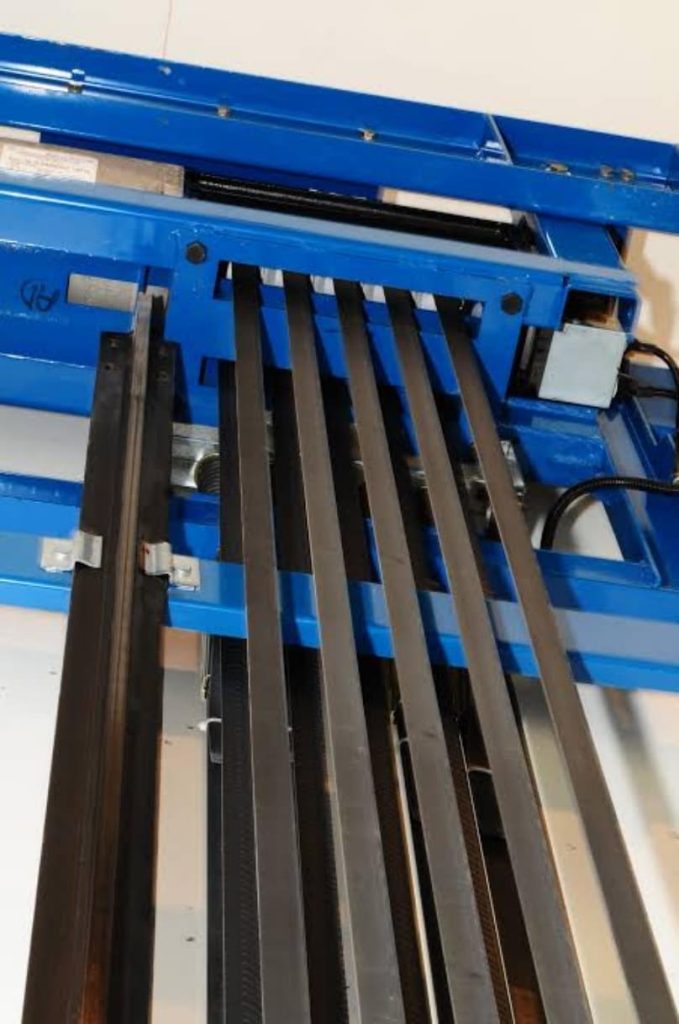
4) CNT Suspension Technology
Carbon nanotubes (CNTs) are microscopic cylindrical structures made from carbon atoms arranged in a hexagonal pattern. They are among the strongest and lightest materials known and are being actively researched for future elevator applications.
Potenziali vantaggi:
- Rapporto resistenza/peso estremamente elevato
- Dramatic reduction in rope weight
- Lower motor power requirements
- Increased travel heights
- Reduced rope sway
- Migliore efficienza energetica
In supertall buildings, the weight of steel ropes becomes a major design limitation. CNT-based suspension systems could potentially eliminate this challenge and enable much taller elevator travel distances.
CNT technology also gained attention through theoretical concepts such as the "Space Elevator," which proposes a cable extending from Earth into space.
5) Linear Motor Elevators
Linear motor technology represents one of the most revolutionary developments in VT.
Unlike conventional traction elevators, linear motor systems use electromagnetic forces to move the elevator car directly.
Caratteristiche chiave:
- No traction ropes
- No counterweights in certain designs
- Direct electromagnetic propulsion
vantaggi:
- Elimination of rope weight limitations
- No rope stretch
- No traction loss
- Reduced rope sway and oscillation
- Improved performance in seismic zones
- Suitable for supertall buildings
Possibilità future:
- Movimento verticale
- Movimento orizzontale
- movimento laterale
- Circulating elevator systems
- Multiple elevator cars operating within a single shaft
Linear motor technology has the potential to redefine elevator design, particularly for buildings exceeding 500 m in height.
6) Vacuum Elevators
Vacuum elevators operate using air pressure differentials and are becoming increasingly popular in residential and low-rise commercial applications.
vantaggi:
- Design compatto
- Requisiti strutturali minimi
- Funzionamento efficiente dal punto di vista energetico
- Installazione veloce
- Suitable for two to three stop applications
- Attractive architectural appearance
These elevators offer an excellent accessibility solution for homes, villas and small commercial buildings.
7) Digitalization and Smart Elevator Systems
The future of the VT industry is closely linked with digital technologies.
Tendenze emergenti:
- Elevator integration with Building Management Systems (BMS)
- Monitoraggio remoto
- Analisi delle prestazioni in tempo reale
- Rilevamento avanzato dei guasti
- Manutenzione predittiva
- Diagnostica basata sull'intelligenza artificiale
- Connettività dell'Internet delle cose (IoT)
Spectrum Expansion of the VT Industry
The application spectrum of VT systems is expanding rapidly beyond traditional residential and commercial buildings.
Aree di crescita:
- High-rise residential developments
- smart cities
- Aeroporti e hub di trasporto
- Ospedali e strutture sanitarie
- Metro and railway stations
- Religious and pilgrimage destinations
- Accessibility solutions for elderly and differently abled individuals
- Impianti industriali e magazzini
- Sviluppi a uso misto
- Infrastruttura turistica
The growing emphasis on accessibility, urban mobility and smart infrastructure is creating substantial opportunities for the VT industry.
The VT industry is entering a new era characterized by innovation, digitalization, sustainability and expanding application areas. Technologies such as gearless drives, PU-coated flat ropes, fiber ropes, linear motor systems and future carbon nanotube suspension solutions are transforming the way people move within buildings.
Simultaneously, digital technologies such as predictive maintenance, remote monitoring and intelligent building integration are improving safety, reliability and operational efficiency.
As urbanization continues and buildings become taller, smarter and more complex, VT systems will play an increasingly critical role in modern infrastructure. The coming decade is expected to witness unprecedented technological advancements, making the VT industry one of the most dynamic and innovative sectors of the built environment.
ALTRO DALLA CATEGORIA
NOTIZIE DEL GIORNO