La nuova mappa dei rischi del settore ascensoristico in Spagna
By Olga Quintanilla Marful | Eventi | Luglio 31, 2026
18 minuti di lettura
Spain's lift sector faces a structural crisis as a 1.2 million-unit fleet grows while roughly 20 percent of technicians approach retirement, making labor safety, training and maintenance continuity inseparable to competitiveness. Stakeholders warn that proposed PRL reforms would add bureaucratic burdens for SMEs and block student access to practical training, so Confemetal urges standardized certification of prevention training to speed workforce entry. New ITC rules, technological sophistication and frequent maintenance increase exposure to hazards, while digitalization and connectivity create cybersecurity risks, ghost failures and demand cyber skills for technicians. Independent inspection, a preventive culture, SME support and viewing safety as a productive investment are framed as essential to sustain the sector.
L'evento online esamina le sfide industriali del paese.
di Olga Quintanilla, EW Europe Corrispondente
The Spanish lift sector, which has one of the largest elevator fleets in Europe, faces a structural challenge that transcends generational turnover. The next retirement of approximately 20% of its technicians, according to Confemetal, combines labor safety, training in risk prevention and continuity of maintenance into inseparable factors to sustain the competitiveness of an essential industrial activity.
This was one of the central messages sent by José Miguel Guerrero, president of Confemetal, during the online event "Occupational Safety and Health in the Elevation Sector: Challenges, Regulations and Future," organized by FEEDA and corresponding with World Safety and Health Day in the Workplace and conducted by Marta Ladero, legal advisor of FEEDA. This meeting addressed the main preventive measures challenges of the sector — from elevator maintenance and the new Complementary Technical Instruction (ITC) to digitalization, talent training, European vision and independent inspection — while Guerrero's intervention placed occupational safety in a context of greater vision as a condition to guarantee productivity, professional qualifications and operational continuity.
Occupational safety cannot be assessed solely from the accident or the regulation, but from "the real capacity of the sector to have enough technicians, qualified and certified to work in safe environments." Thus, the president of Confemetal referred to the great challenge that Spain will face to maintain a fleet made up of 1.2 million devices, which is growing at a rate of 17,000 units annually, before the next jubilation of some 240,000 people in the metal sector, of which 20% will be technicians belonging to it. He said:
"It will be necessary to incorporate hundreds of professionals in the sector for maintenance. It seems to us an important aspect, and we consider that it is a strategic element of the industrial sector in general and of elevation in particular. And it is that occupational health safety must be understood as a productive investment, which contributes to improving efficiency, reducing costs arising from accidents and guaranteeing the continuity of the activity."
Unacceptable Regulatory Requirements
At the regulatory level, Guerrero criticized the introduction of two business entities that the Government plans to introduce in the current reform of the Occupational Risk Prevention Law (PRL) of 1995 as: the territorial prevention agent and the modification of the preventive resource:
"Since Confemetal, we have worked a lot in line with the Spanish Confederation of Business Organizations (CEOE), and the rest of our business and industrial associations have submitted objections to prevent the PRL reform from prospering under the proposed terms."
The Metal Industry Employers Association warned that the Government will approve it "promptly," if it is necessary to follow the legislative route to "maintain opposition" to these new regulatory requirements that "would further increase the already unacceptable bureaucratic burden on the small and medium-sized enterprises (SMEs) that make up the majority of both the elevator and metal sectors."
Spain has one of the largest elevator fleets in Europe, but it faces another pain point in its sector, that is, in training technicians without lowering safety while keeping prevention from becoming an entry barrier. In this regard, Guerrero considers that "prevention must be facilitated from access to employment and not entail administrative barriers that impede the incorporation of new talent into the sector."
Thus, he explained that there are many annual contracts for students who carry out work practices in the metal installations and services sector, which "are faced with important barriers when accessing works and work centers because platforms for combining business activities and large contractors require labor risk prevention documentation comparable to that of any worker without recognizing that the training provided by educational centers should be sufficient." For metal employers, this situation causes a "de facto block" of access to real environments, discouraging companies from incorporating dual training and frustrating the objective of integrating qualified talent under conditions of legal and material security as demanded by companies in the sector.
Certify PRL Training
The shortage of qualified technicians has intensified competition between companies in the sector, placing talent attraction and retention among its main priorities. In this scenario, Confemetal defends the need to "advance a model that combines maximum security with real operability, avoiding duplication and unnecessary administrative burdens." For him, he proposes "certifying in a standardized way the PRL training of the student," with the objective of facilitating their incorporation into real work environments and strengthening dual training.
Guerrero insisted that occupational safety and health must be understood as a productive investment to contribute to improving efficiency, reducing costs arising from accidents, guaranteeing the continuity of activity and increasing productivity and the qualifications of professionals in the sector.
He also alluded to absenteeism as one of the big issues that plague all companies. Guerrero held "devastating" statistics at the time that denounced the incidence of temporal incapacity (IT) due to common contingencies related to the prevention range, pointing to an increase of around 78% during the last five years.
Guerrero said PRL is "a structural factor of competitiveness," at the same level as training, innovation or regulatory stability, and security standards form part of the requirements to operate in international markets and strategic sectors.
Interventi Specifici
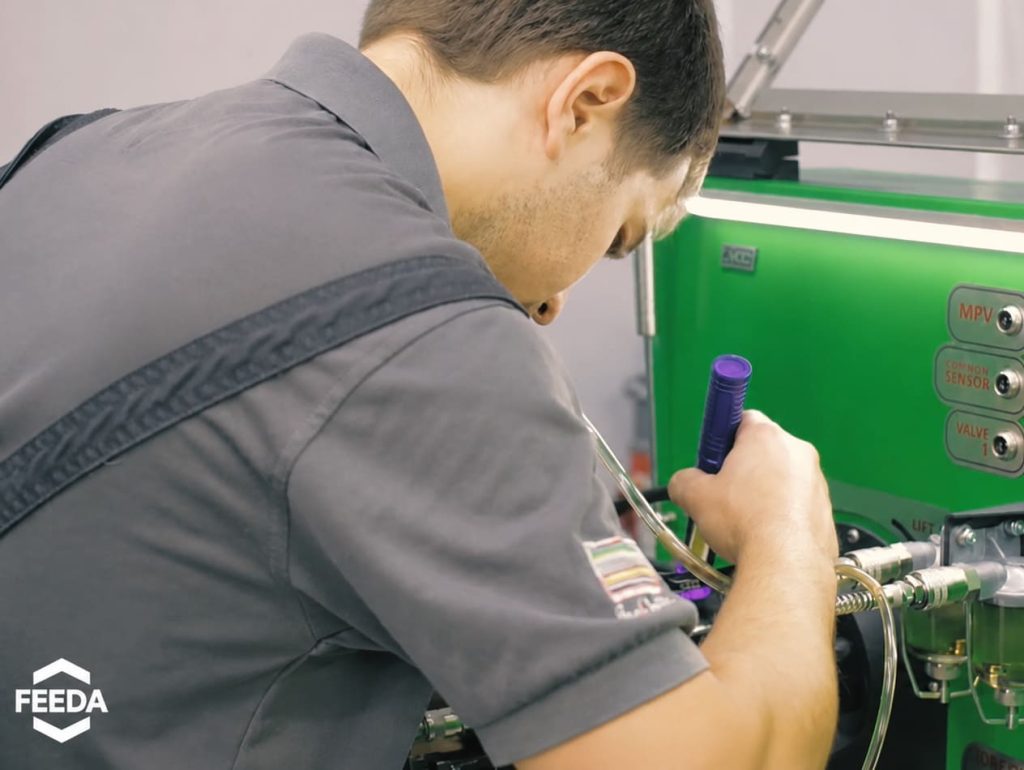
From the operational field, Miguel Ángel Arcos, member of the FEEDA Security Committee and responsible for Safety, Quality and Environment for KONE in Iberia, referred to the daily routines of elevator maintenance, as well as to real risks and good practices. Thus, he explained the particular characteristics of the Spanish elevator sector: It combines one of the largest elevator fleets in the world, both per capita and in total number of units, with a high frequency of maintenance — 12 visits per unit per year — which increases the exposure of technicians and requires an especially strong culture of prevention.
In this context, Arcos noted that "the ITC has had a major impact within the sector," both due to the increase in workload and the incorporation of new technical innovations and actions that were previously unrealized. In his opinion, the safety of the technician must be understood within an increasingly demanding environment, in which regulatory developments, the increasing technological sophistication of equipment, the remote rescues, the connected lifts and the antiquity of part of the fleet oblige to "evaluate the risks with a specific view and adapted to each intervention."
Arcos explained that safety in maintenance requires focusing on the risks inherent in the daily work of technicians. Among them, he mentioned the control of the elevator and its energy — electrical and mechanical — the risks of entrapment and electrocution, the operations of lifting and suspending loads, as well as the presence of shaft openings, working at height and specific environmental conditions.
“The control of the elevator is absolutely fundamental,” he said, adding: The danger of a maintenance operation does not depend solely on the magnitude of the load, but on “the concrete circumstances” in which it takes place. To illustrate, he stated: “What is more dangerous, lifting 80,000 kg to 87 m or lifting an 800 kg cabin? Much of the time it is not just about more kilograms, it’s about context, a particular assessment of danger and risk.” In his opinion, these types of questions are ones that companies should consider by combining risk assessments with their prevention plans.
Technical Multi-Skilling
But Arcos did not limit prevention to the strictly technical risks of each operation. He also focused on the lack of technicians and the turnover of personnel between companies, factors that could weaken the consolidation of an internal preventive culture. “We have few technicians in many cases and technicians in flux between companies,” he said, before warning that this movement is “certainly risky” from the point of view of prevention.
In this context, we also refer to the “multi-skilling” of maintenance technicians who can work not only on elevators, but also on escalators or automatic doors. As he explained, this lack of specialization can generate “additional risks,” especially in small companies or when professionals must work on equipment with which they are unfamiliar.
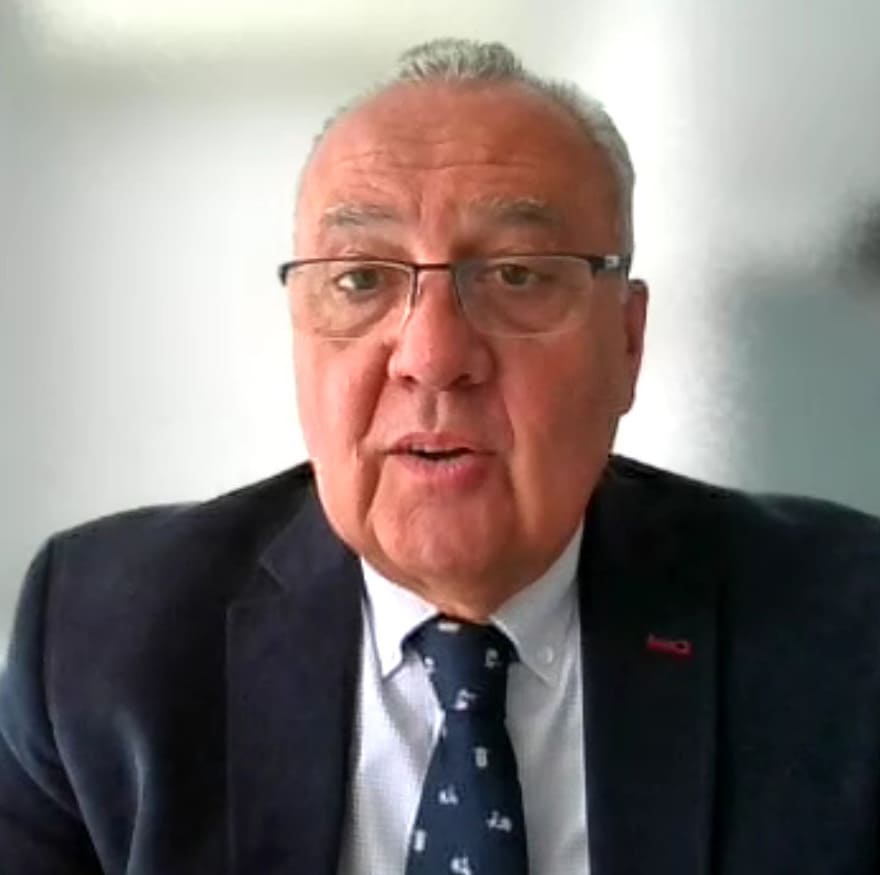
Arcos demonstrated the similarity of coexistence in the sector of companies with large structures and SMEs with greater difficulties, a reality that also impacts safety management. However, he reminded that, despite the differences between companies, the human impact of a workplace accident is always the same: “It’s a person with names and surnames, with family, and in the end, that’s what we must always prevent.”
In response to these claims, Arcos highlighted the work of the FEEDA Safety Committee, chaired by Carmen Carbonell, in the development of safety instructions and training videos for its associates, which are especially useful for small businesses. It also indicated the search for more specialized preventive support for the sector and alluded to the use of digital tools and AI to analyze risk communications within companies. He closed his remarks by emphasizing the cultural shift that occupational risk prevention is undergoing: As opposed to outdated approaches, “no accident is acceptable.”
The shortage of qualified technicians has intensified competition between companies in the sector, placing talent attraction and retention among its main priorities.
Preventive Attitude
José María Obis, president of the FEEDA Technical Legislation and Regulations Committee, addressed the new ITC and its impact on safety as a regulatory response to concrete risks detected in the sector. His remarks focused on connecting accidents recorded in elevators and escalators with technical and legal measures designed to prevent them. One must realize that safety cannot rest solely on regulations; it is also on the “preventive attitude” of companies and professionals.
From European Lift Association (ELA) data, Obis recalled that, in 2020, there was a drop in the number of accidents until 2022, which saw 459 user accidents on lifts with 11 fatal, 31 serious and 417 minor accidents. These figures help to explain the origin of some of the technical requirements incorporated into the new ITC.
He mentioned among the causes of these accidents: leveling accuracy (144); users being struck by doors and objects (65 cases, four of them fatal); the absence of car doors, people trapped in the cabin without a communication system; uncontrolled car movement; problems with locking devices; sudden stops on the other side of the elevator and misuse of the equipment. All of these measures are set out in Annex VII of the ITC.
It also includes, among others, a stopping precision of $\pm10\text{ mm}$, the installation of light curtains, bidirectional communication in the cabin, protection against uncontrolled upward movements and other requirements related to guide rails, load-control devices or counterweights.
In the analysis of occupational accidents, it was recalled that, in 2022, 719 workers in the sector suffered accidents, a figure that was within a relatively stable range of between 600 and 800 annual accidents.
In the section relating to maintenance, Obis noted that 521 workers suffered accidents in 2022 and listed causes such as cuts, blows, entrapments, uncontrolled cabin movements, falls from height and exposure to electrical hazards.
In the context of prevention, he stressed that regulations play their role and that companies have resources such as individual protection equipment, but warned that everything becomes less effective if we “fail in our day to day with our actions." "The change is what we have to generate ourselves," he stated, stressing that safety is a "sector priority" that does not only affect prevention departments or company managers.
Escalator Regulations
Obis said escalators are within the Machinery Directive and are excluded from Royal Decree 355/2024, the ITC for lifts. However, he argued that specific legislation would be necessary for escalators that would allow for correcting or palliating his own case of a series of accidents in shopping centers and large areas.
To support this demand, he alluded to accident data collected by the ELA, which in 2022, recorded three fatal, 11 serious and 143 minor accidents among users of escalators. Among the main causes include slips on escalator steps, entrapment between the step and the skirt panel, inappropriate use with shopping carts or wheelchairs, falls due to insufficient braking distances and loss of balance.
Obis called for attention to insufficient and restrictive work space in elevators without a machine room and escalators, where the concentration of machinery and control panels requires the reinforcement of safety measures to prevent incidents.
Ghost Faults
Next, the third block followed on "Digitalization and Safety: Technology for Prevention and Efficiency Services," presented by Pedro Piñero, president of the Digitalization Commission of FEEDA. His presentation framed the debate on the technological evolution of the elevator and how this transformation affects both prevention and maintenance efficiency.
Piñero explained that, while the elevator operated as a closed system, safety is focused especially on physical protection: preventing falls, entrapments, uncontrolled movements or mechanical failures. With digitalization, however, the sector has entered a paradigm shift. "The connected elevator does not only require 'safety' measures aimed at the physical security of users and technicians, but also 'security' measures against unauthorized access, intrusions and external attacks," he said.
This is where cybersecurity comes into play. Piñero described it as a "jungle" and stressed that the elevator sector must take prevention in this area very seriously. According to the warning, it is not about hypothetical risks: "There are attacks on companies and public bodies by criminal organizations that constantly scan the network in search of vulnerabilities." Thus, he highlighted the intrusion in an elevator can result in physical risks during a technical intervention if an attacker accesses the system while it is working. This could cause unexpected movements of the cabin, doors opening, a system restart or maneuver blockages.
Piñero also said that digital risks can have direct operational consequences for the supporting companies. A connected elevator could be manipulated to experience repeated failures, "ghost failures," sabotage or downtime. "These situations directly impact the work of the technician," he warned, generating unnecessary interventions, equipment in unpredictable states, constant emergencies and added pressure on maintenance services.
The risk is amplified when connectivity is supported on iCloud platforms: An intrusion could simultaneously affect lift systems, block equipment, multiply emergency warnings and strain the response capacity of supporting companies.
In giving a detailed analysis of the Cyber Resilience Act, Piñero recalled that this European regulation introduces requirements for products with digital elements including hardware, software, components, remote processing services and cloud platforms. From the point of view of technicians, he explained, these requirements contribute to reducing risks by forcing you to establish individual identities, control remote sessions, record access, limit privileges, publish security patches and manage vulnerabilities during the equipment's life cycle. In this sense, he argued that the Cyber Resilience Act should not be understood solely as "a regulation" but rather as "a real improvement in the occupational safety of technicians." With these measures, the connected elevator goes from being potentially manipulable equipment to becoming an authenticated, traceable, monitored system with safer maintenance.
The Technician: Last Defense
However, security is not guaranteed by this standard. In the connected elevator, digital prevention requires shared responsibility between the manufacturer, maintenance company, building operator and iCloud provider. "If one of these shortcomings fails, there is a risk for increased exposure," said Piñero. Therefore, remember that risks do not disappear completely: They can arise due to inadequate management of credentials, configuration errors, phishing, identity supplantation, infected laptops, compromised networks or undetected vulnerabilities. He therefore argued that classical training in mechanical, electrical and functional safety must be complemented with skills in operational cybersecurity, secure management of remote accesses, equipment protection and system updating, because "the technician is the last defense of the connected elevator."
Ambienti sicuri
After analyzing the impact of digitalization and cybersecurity on the connected elevator, the focus shifted to the qualification of professionals in safe environments. In this block, Fidel Romero Salor, professor at the Federation of Metal Industry Entrepreneurs of the province of Alicante (FEMPA) and author of a reference guide for lift maintenance technicians spoke. He defended — from a personal position and not as an official position of FEEDA — that "training can be complementary, but it is not the key to occupational risk prevention," understood as training courses. And it was even more important to state, "As they are currently planned, they will not work."
For Romero, the prevention of occupational risks is summed up in three "cares": taking care of people, taking care of the means and taking care of the procedures that are carried out.
And here it includes the assignment of tasks, work protocols, analysis of objectives, evaluation of accidents and incidents, allocation of equipment and PPE, work rhythms and health surveillance. The training, he argued, can accompany this process, but not replace it: It is "the envelope," not "the bomb." Truly formative, in conclusion, is "the global culture of the company where certain practices are understood, shared and assumed on a daily basis."
He, thus, alluded to the metal sector training agreement that collects content but is "not a true training program." It denounces that it lacks a reality analysis, definition of objectives, competencies, evaluation criteria and a pedagogical structure: Occupational risk prevention in the sector needs less training bureaucracy and more educational science applied to the reality of the elevator."
Romero proposed advancing toward more unified, coherent and skill-oriented training, not simply justifying hours of assistance. “Growth is not the same as bloat, nor is complexity the same as chaos,” Romero metaphorically stated, denouncing that the system is accumulating requirements, courses, hours and validations, but without necessarily gaining preventive effectiveness.
The Two Speeds of Occupational Risk Prevention
“It is increasingly difficult for a technician to learn by doing real practices in a company,” Romero said. This is caused by fear, lack of accreditation papers or by the demands of the platforms, and in the end, “the technician is the only one who can do this and look for a month at what another worker does. And they are not learning.” In this context, it is considered that the current design of the formation could generate a PRL for the speeds; one for large companies with specialized resources and the other for SMEs, with greater difficulties in accessing specific training and retraining their technicians.
Other aspects that stand out are addictions and management of conflict situations. Romero noted that, in teams of 10 people, “it is not rare” that there is someone with addiction problems, and he reported that this issue does not appear sufficiently explained in prevention training: “It is not there, not even close, but as an appendix in some certain aspects of training courses.”
It is concluded that advances are being made in safe rescue protocols, technology access protocols, audiovisual materials and preventive culture promoted by companies and the FEEDA Training Committee. However, he commented that, despite the existence of “valuable initiatives,” they are now trying to implement them within the current framework of the occupational risk prevention training agreement.
European Support
The event also incorporated the European vision of the sector through the reading of an institutional note sent to FEEDA by Wim Koster, president of ELA. Although the event coincided with World Day for Safety and Health at Work, preventing ELA and the European Federation of Elevator SMEs (EFESME) from attending in person, both organizations promoted, for the first time in 2026, a joint celebration with their national associations and affiliated companies. The aim was to involve all stakeholders connected with safety: workers, users, business owners and field technicians.
Koster stated that security is “responsibility, commitment and responsibility of everyone,” highlighting the support of the European Commission, the European Economic and Social Committee and the European Agency for Security and Health at Work. He also recognized the role of FEEDA and Spanish Federation of Associations of Small and Medium-Sized Elevator Companies (FEPYMA) and defended that security “has no barriers,” appealing to international cooperation to protect health and well-being in the elevation sector.
This was followed by a block dedicated to control and inspection, focused on independent verification as a part of this safety chain. Jordi Olivera, technical director of Elevation at TÜV SÜD in Spain and Portugal and member of Spanish Federation of Associations of Inspection Bodies (FEDAOC), understands that the control bodies are not limited to carrying out the technical inspection of the elevator. They also evaluate aspects directly related to occupational safety and health.
Olivera recalled that the control bodies, defined by Royal Decree 2200/1995, must have technical capacity, material and human resources, impartiality and independence to verify compliance with the security requirements established in the regulations. This function, however, is not limited to the safety of users, but also reaches “all personnel who have to work on an elevator.” From this position of independence with respect to the installation, the maintenance company, the installer and the owner, the control bodies apply the installation, the maintenance company, the installer and the owner, the control bodies apply the regulations, carry out measurements and form part of the chain that monitors whether working conditions are safe, thus contributing to the continued improvement of occupational safety in the elevation sector.
Bad Communication = Risk?
One of the obligations is recording in the inspection certificate any incident that could pose a risk to safety and health. Examples include unsafe access, unevenness, plastering risks, pole protection, insufficient lighting or excessive temperatures. Olivera also highlighted the importance of coordination with the conservation company technician who monitors the inspection, which shares many tasks. “One bad communication” can cause a work accident.
Olivera detailed some of the points of verification that have a direct relationship with occupational safety. In the elevator shaft, inspectors check the enclosure, the absence of sharp edges, perforations or projections, separations regarding moving parts, lighting, ventilation, safety precautions, pole protections and safe access to the shaft. “These elements,” he said, “allow us to reduce risks such as blows, entrapments, falls at different levels or abrasions.”
In the machine room, inspection focuses on access conditions, doors and traps, openings on the floor, ventilation, lighting, unevenness, barriers, electrical protections, ground floor, plumbing, cabling and protection of rotating parts. Olivera highlighted the machine rooms located in freezers, which, during the hot months, have poor ventilation, turning the space into a “horn” that can create risks for technicians.
Another critical point was the cabin roof, a particularly sensitive area, from which it can be seen that the inspection maneuver is correctly identified, the stopping device is accessible, the power outlet is in good condition, there is an adequate location on the ground for the metallic elements, the bars reduce the risk of falling to a different level and the distress petition device works correctly. This last aspect is essential if a technician becomes trapped in the cabin or in the ditch and needs to request rescue.
Olivera completed his presentation, describing the role of inspection bodies as part of a chain of sectoral collaboration aimed at continued improvement. “We are one of the most important elements of the sector,” he stated. “We are there to help and, above all, for this continued improvement in the safety of the installations.” His message placed the independent inspection as a technical guarantee to verify that safety does not fall solely at a regulatory or declarative plane but is assessed on the actual installation.
In the name of FEPYMA, its president, Ana Martínez, thanked participants for their involvement in the journey and thanked EFESME and ELA and all the national associations and companies that came together to celebrate World Day of Security and Health at Work.
Martínez stated the safety of users and workers constitutes the “common and strategic goal” of the sector, especially in a business sector where 73.3% of companies register a sales volume of less than EUR 3.5 million. “If we want a safe sector, we must achieve safe SMEs,” she stated.
Martínez reaffirmed FEPYMA’s commitment to the promotion and dissemination of occupational safety and highlighted some of the greatest issues addressed, such as rigor in maintenance, adaptation to new regulations, the role of digitalization as a tool for efficiency and competitiveness, and training understood on the ground as transmission of contained, real learning. “Safety is not just the objective, it is the value that guides every decision, every advance and every step towards the future,” she concluded, calling for more collaboration, innovation and training, with SMEs as an essential part of the future of the sector.
Eugenio Barroso, president of AECAE (the Spanish elevator-sector association), highlighted that safety is “implicit in design, in the factory,” from which the level of risk that will accompany the elevator throughout its useful life is defined. He also underlined the role of technology — automation, robotization, digitalization and AI — as an ally to reduce the exposure of people to risk, always within a “preventive culture” understood as “a way of working.”
José Carlos Frechilla, director of FEEDA, concluded the event by placing safety as the irrevocable element of the elevation sector in Spain. “Safety is now becoming the fundamental pillar of our sector,” he stated, noting that development, innovation or growth cannot be understood without safe work environments and reliable installations. In this context, we highlight the entry into force of Royal Decree 355/2024 of the new ITC as a turning point that obliges the sector to advance in “technical demand, responsibility and adaptation capacity.”
Frechilla linked this new regulatory landscape to other pressing issues, such as digitalization, occupational risk prevention, maintenance and the need to have qualified, trained and “culturally committed” professionals. He also claimed the role of SMEs as the basis of the business fabric and the importance of ensuring safety from the design stage of components. In the name of the federation, he finished by saying the elevator industry in Spain is a “serious,” “responsible” and “committed” sector with the highest standards of quality and safety, thanks to the joint work of the organizations and companies represented.
ALTRO DALLA CATEGORIA
NOTIZIE DEL GIORNO