
Henning, Schwelm'e Sadık Kalıyor
By Sascha Göbel | Etkinlikler | 31 Temmuz 2026
Okuma süresi 8 dakika
BU MAKALEYİ DİNLEYİN
At the Schwelm Elevator Technology Symposium in Hagen, speakers outlined how the move from EN 81-20/-50 to EN ISO 8100 is reshaping design and safety, shifting building-related requirements and more verification responsibility onto manufacturers while enabling new suspension means and mechatronic safety components. The Machinery Regulation (EU) 2023/1230, effective January 20, 2027, adds cybersecurity obligations; EN 81-20/-50 do not comply, EN ISO 8100-1/-2 do, and a 36-month transition with optional rights and additional assessments applies. AI and predictive maintenance were framed as edge-focused, human-in-loop tools that complement rule-based diagnostics. Emergency communication, accessibility standards and a skilled-labor shortage complete a picture of a multi-year transition demanding coordinated standards, technology and qualified personnel.
EN ISO 8100, MR ve Yapay Zeka Arasında — Tematik Bir Genel Bakış
Sascha Göbel tarafından, EW Europe muhabir
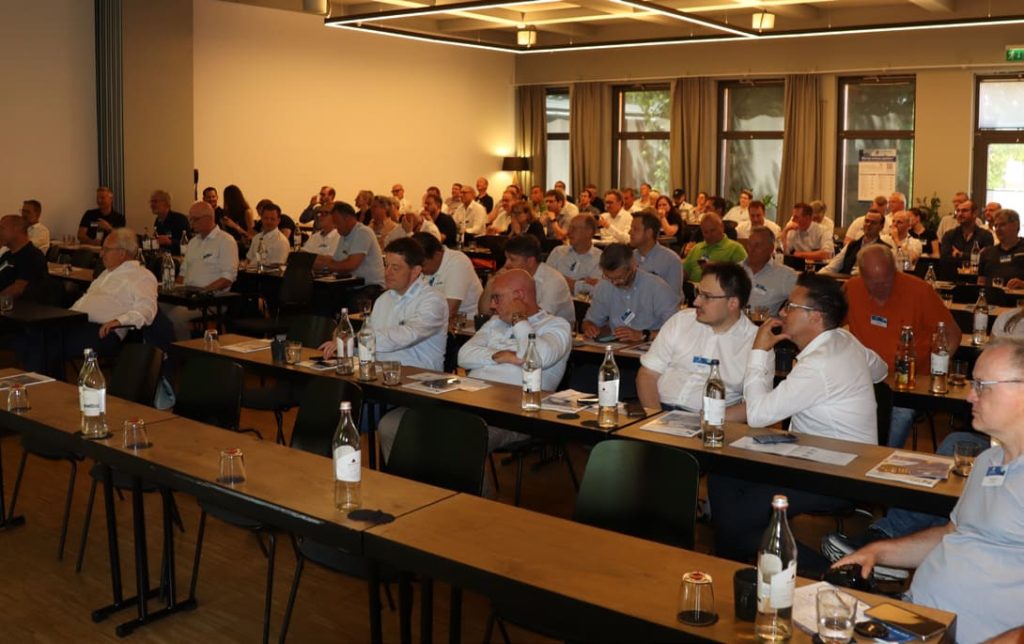
Over two days, the Schwelm Elevator Technology Symposium once again offered a status check for the industry. In its 22nd year, held not in Schwelm, Germany, but for the first time at the Arcadeon in Hagen, Germany. Schwelm – home of Henning GmbH – remains the event's namesake.
The more than 120 attendees were offered plenty. Across the presentations, six themes interlocked: the transition from EN 81-20/-50 to the EN ISO 8100 series, the new Machinery Regulation (MR) with its cyber provisions, international market access, AI and predictive maintenance, emergency communication and accessibility and the human factor. This report organizes the contributions thematically rather than chronologically.
EN 81-20/-50 -> EN ISO 8100: The Standards Shift Gets a Roadmap
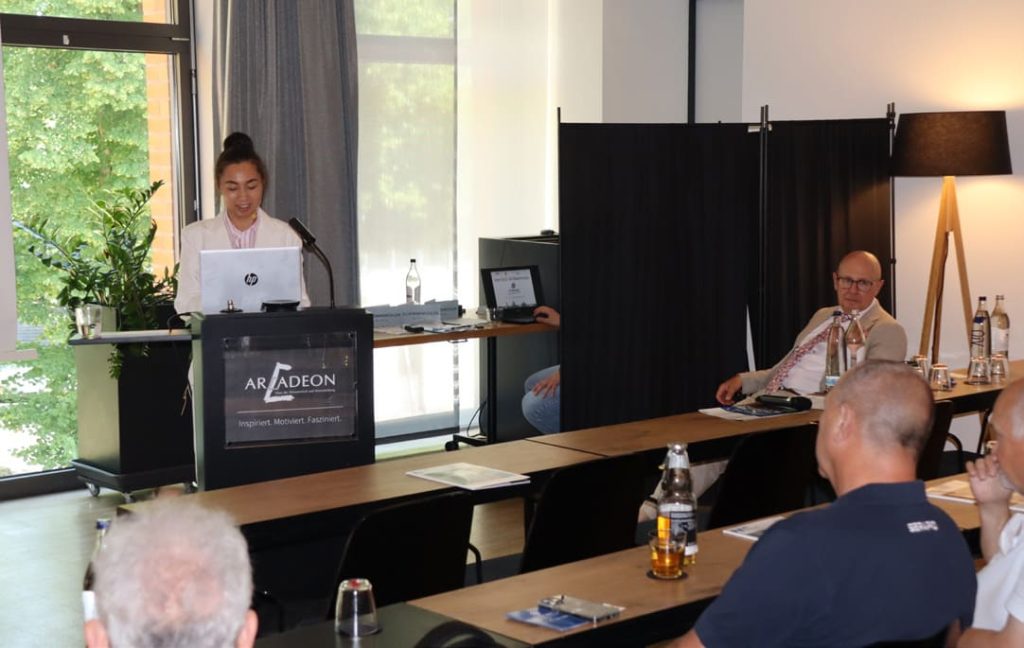
Peipei Wang (VFA Interlift e.V.) set out the regulatory framework in her report from the VFA committees. She placed the EN ISO 8100 series within international harmonization: the EN ISO version of 8100-1/-2 was, according to her, published in June 2026, with the Official Journal citation “in preparation.” This should be kept distinct from the preceding ISO publication itself.
How deeply the transition reaches into technology was shown by Prof. Dr.-Ing. Wolfram Vogel (Vogel Gut Achten) using the example of suspension means. The EN ISO 8100 series, he argued, does not merely replace EN 81-20/-50 in wording but shifts building-related requirements into the “building-related boundary conditions” and opens up the world of suspension means beyond the classic steel rope (polymer-sheathed ropes and belts, toothed belts). At the same time, it shifts more verification and self-responsibility – service life, discard criteria, monitoring – onto the manufacturers.
That the standards shift also affects safety components was made clear by Dr. Stephan Rohr (Cobianchi Liftteile AG). He presented electronically triggered and, in the future, mechatronic safety gears (“esafety,” CANopen communication) and provided a mapping table of the safety functions from EN 81-20 to ISO 8100-1.
The counterpoint was set by Yasin Bayrakli (CEDES AG, standing in for Daan Smans) with contactless absolute positioning systems (APS + iDiscovery, SIL3) that replace numerous mechanical shaft components and trigger the relevant safety functions. CEDES (positioning/evaluation) and Cobianchi (safety gear) evidently formed a system chain.
Machinery Regulation, Cyber Law and a Look Across the Border
The legal mechanics of the MR were unpacked by Dennis Lindeboom (Liftinstituut BV). The already-published MR (EU) 2023/1230 applies from January 20, 2027, at which point the Machinery Directive 2006/42/EC is repealed. Under Article 51 of the MR, every reference to the Machinery Directive automatically becomes a reference to the Regulation – meaning that Annex I of the Lifts Directive 2014/33/EU will, from the cut-off date, point to Annex III of the MR. New there is clause 1.1.9 (“protection against corruption”), while clause 1.2.1 (safety and reliability of control systems) has been amended – the thrust being cybersecurity. Key message: EN 81-20/-50 do not meet the new requirements, whereas EN ISO 8100-1/-2 do.
During the 36-month transition period, an optional right-of-application applies; anyone who continues to build to EN 81-20/-50, however, must from January 20, 2027, additionally assess against four requirements of ISO 8100-1:2026 and retain safety-related software records for at least five years.
The cyber and data framework was again supplemented by Peipei Wang: with the Data Act, the Cyber Resilience Act, the NIS2 Directive and EN ISO 8102-20, which she classified as the industry's first standalone cyber standardization topic. Also named as fields of effect were EN 81-28 (in the context of an ELA note on VoIP two-way communication) and EN 81-76 – as the new standard for the evacuation of persons with disabilities. The VFA is supporting the transition with guidance documents and a "Data Act Toolbox."
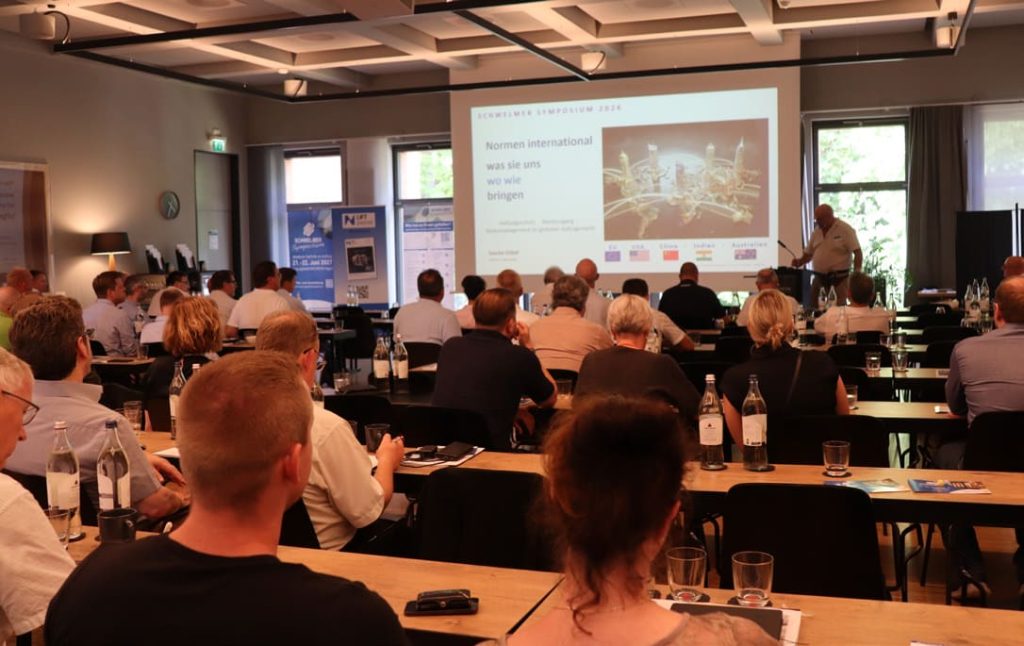
The international angle was covered by your author (Sasusei Engineering). He examined five markets – European Union, U.S./Canada, China, India, Australia – along three guiding questions (Which standards basis applies? How does it take legal effect? What happens in the event of deviation?). A comprehensive technical article on this topic will follow in ELEVATOR WORLD Europe.
EN 81-20/-50 do not meet the new requirements of the Machinery Regulation – EN ISO 8100-1/-2 do. – paraphrased, Dennis Lindeboom (Liftinstituut) on MR (EU) 2023/1230
How these building blocks come together in the controller was shown by Markus Labruier (Klinkhammer Steuerungen und Komponenten für Aufzüge) with the image of the lift controller as the "heart of the lift," evolving into a data-driven, open mobility platform: edge controller, cloud, sensors, open data architecture (MQTT), predictive maintenance and integration into the building ecosystem.
The program underwent short-notice changes; some announced contributions were dropped and others were given by stand-ins. Markus Steck (Aufzugdienst Steck), for instance, stepped in spontaneously and reported on experience with the use of LLM models in everyday operations. Mentioned only in passing, too, was the talk by Kevin Bücker (FINDIQ), who presented specialized AI as a lever for the service quality of leading industrial companies.
Thomas Lipphardt (KONE), under the title “Data, Data, Data – and What Do I Do With It?”, addressed the diversity and ownership of data – the "fuel" for AI applications.
AI: Between Edge, Agents and Disillusionment
A deliberately sober entry into AI was provided by Marco Höbbel (Henning GmbH & Co. KG). His argument: AI should complement the proven rule-based diagnostics in the control cabinet, not replace them – "the cloud trains, the edge decides." Rather than "understanding the entire lift," Henning relies on subsystem-specific models (doors, drive, suspension, car, ride quality) and local specialization. As a data basis, he cited more than 10,000 mixed systems, over 100 days of data retention "on edge" and more than two years of raw-data availability.
Tom Chenna (Mainteny GmbH) argued in more practical, product-oriented terms with a four-stage AI maturity model (conversation $\rightarrow$ prompt $\rightarrow$ agent $\rightarrow$ automation) and the formula “Agent = LLM + memory + tools.” Three in-house examples – an AI telephone assistant, an AI chat in the ERP system and an agent built live with human approval – illustrated the “human in the loop” approach.
A critical outside view was contributed by Philipp Broßler (K-solutions). He set the speculative “AI bubble” on the financial markets – backed by an embedded third-party chart per Bloomberg News – against practical usefulness: the large language model (LLM)-supported service chatbot “Kollie” with real-time access to wiring diagrams and event logs, which he demonstrated “live.”
Emergency Communication, Accessibility and the Human Factor
The communication side was covered by Michael Puttrus (Telegärtner Elektronik GmbH). Starting from the distinction between emergency call and two-way communication under EN 81-28 and the retrofit pressure from 2G to 4G, he presented the extension to visual two-way communication. As the intended reference framework, he cited section 4.7.11 “Visual (text/symbol) two-way communication” of a “prEN ISO 8100-7 (2026),” as well as the open TGE protocol “LACS.”
On the subject of evacuation, Frank Saalmöller (SCHAEFER GmbH) took the floor. He outlined the substance of EN 81-76 as a standard for new lifts for the evacuation of people with disabilities — which expressly does not cover evacuation lifts "for the general public" — and explained the operating modes (automatic, remote- and attendant-assisted) together with video and two-way voice communication.
A service-side counterweight to the technology-driven manufacturer contributions was provided by Horst Schickor (Lift-Consulting) with "Skilled-Labor Shortage and Digitalization in Lift Service." From the same starting point — a growing number of installations, aging workforces, a shortage of new talent, increasing technical complexity — he derived a cascade of consequences: from demand rising faster than supply, through longer downtimes and declining availability, to safety risks, which he underpinned with practical photographs of neglected existing installations. Digitalization — remote monitoring, Internet of Things sensors, predictive maintenance, AI-assisted fault analysis — can support the service technician, he argued, but not replace them: mechanical work, passenger release and on-site responsibility remain tied to people. His conclusion fitted the day's common thread: safety arises from technology, processes and qualified personnel.
A human counterpoint — also on the subject of skilled personnel — was set by Katrin Schwickal (Riedl Aufzugbau GmbH & Co. KG) with the economic value of employee motivation, drawing on the evaluation of various studies to report remarkable figures.
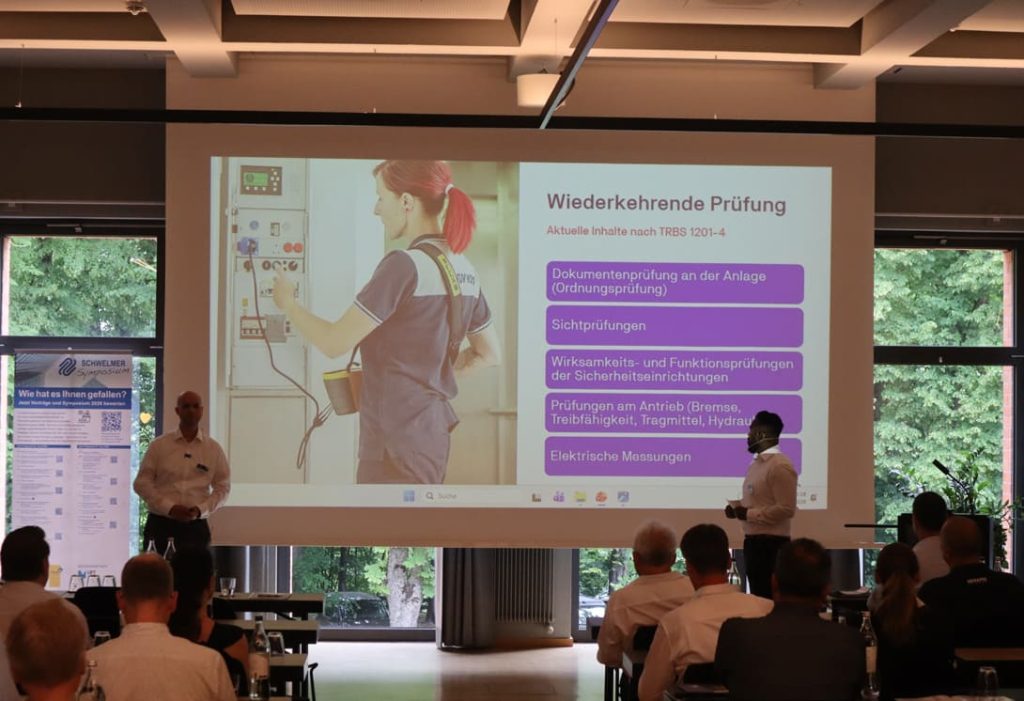
The TÜV NORD presentation demonstrated on-site inspection support without a maintenance fitter.
The presentation by TÜV NORD was followed with interest: Andreas Magenheim and Kirusanthan Gunapalasingam (TÜV NORD) presented their company's portfolio, including the on-site inspection of installations without a maintenance fitter and the planned extension to technical support for the modernization of lifts.
Sonuç
Anyone summing up the two days in Hagen finds the common thread almost by itself: The standards shift from EN 81-20/-50 to the EN ISO 8100 series runs — from suspension means through safety components to positioning — through nearly every technical presentation, and the MR lays a second, legal layer on top of it with its cyber requirements. Striking is how many key dates are still marked as "estimated": The industry is visibly in the middle of a multi-year transition phase in which optional rights, coexistence and additional assessments must be managed in parallel.
Alongside this, the program showed a second movement — AI and predictive maintenance — oscillating between practical benefit and healthy realism, as well as the quiet reminder that technology does not run without motivated skilled workers.
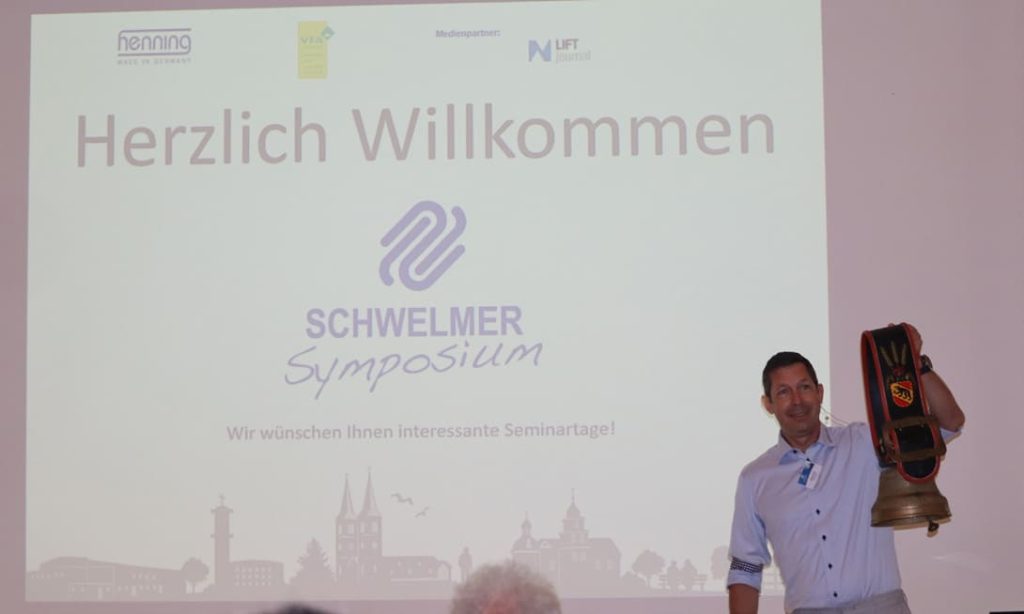
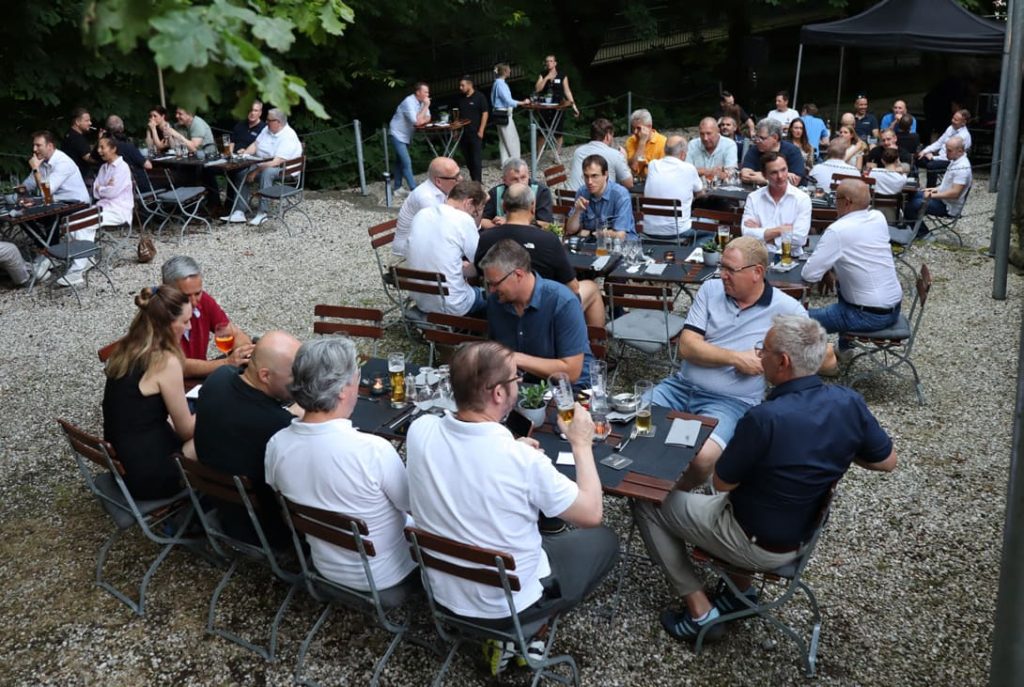
The change of venue to Hagen did no harm to the familiar atmosphere; the convivial evening program provided an entertaining, relaxed setting for professional exchange. The weather was not the organizer's responsibility — it was blazing hot, and an air-conditioned lecture room may even have boosted attendance at the presentations more than usual.
The accompanying exhibition in a separate room was well attended, with lively activity among the guests and engaged discussions — networking at its best.
Personally, as EW Europe correspondent, I take away above all one thing: 2026 was the year in which the standards shift stopped being a matter of the future — and began to dictate schedules. The event: a clear recommendation — I have already registered for next year's Schwelm Symposium.

KATEGORİDEN DAHA FAZLASI
GÜNLÜK HABERLER