
50 años de inspección de ascensores en Chicago
By Sara Korolevich | Sección Regional Especial El | Julio 31, 2026
7 minuto de lectura
ESCUCHA ESTE ARTÍCULO
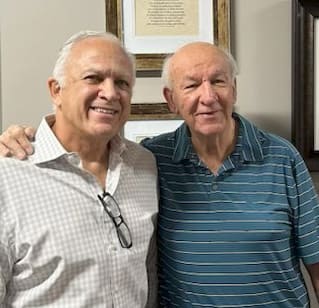
Anthony DiBiase and Frank Cervone built Elevator Inspection Services from hands-on careers in iconic Chicago towers into one of Chicagoland's most trusted inspection firms. Over fifty years they managed high-rise challenges at the John Hancock Center, double-deck cars at the Standard Oil Building, nonstop hospital lifts and O'Hare's vast system, while witnessing technology move from water-driven hydraulics and relay rooms to compact controllers and modern safety systems. State oversight transformed inspections from an honor system to witnessed testing, raising safety standards. EIS credited rapid responsiveness and personal service for its reputation. Now part of VDA, the firm’s Chicago-rooted standards continue under new ownership.
Anthony DiBiase y Frank Cervone convirtieron a EIS en una de las empresas más confiables del área metropolitana de Chicago, y fueron testigos de la transformación de la industria de la verificación técnica de la ciudad durante el proceso.
by Sara Korolevich
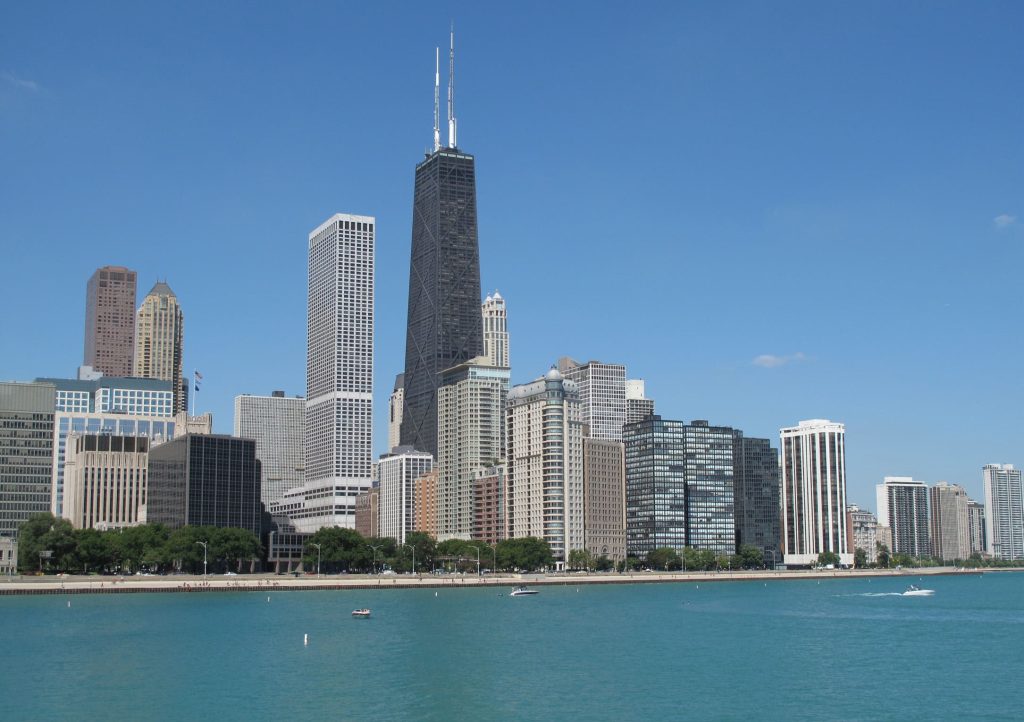
Anthony DiBiase keeps a photograph of the John Hancock Center in his house. He likes to tell people it's the building that almost gave him a heart attack. DiBiase delivers the comment with humor, but it reflects the demands of managing vertical transportation (VT) in a major Chicago tower. DiBiase spent nearly 30 years wrapped up in that building — as a mechanic, a supervisor and, eventually, as an owner of Elevator Inspection Services (EIS). Some of those years came with weekend calls scrambling to find a repair crew for a stalled express car while a customer waited — not patiently — on the other end of the phone.
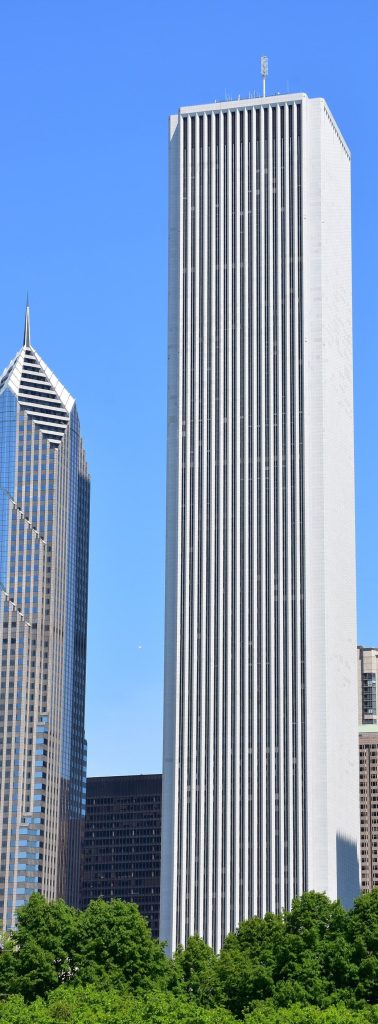
His longtime business partner, Frank Cervone, has his own version of that story. His was the Standard Oil Building, an 83-story tower in the Loop now known as the Aon Center where he worked on the project during construction and helped turn over new elevator equipment for public use in the early 1970s.
The tower introduced him to some of the newest equipment available at the time. "I probably spent a couple of years, on and off, in that one building," Cervone said.
Between them, DiBiase and Cervone have spent roughly 50 years in Chicago's elevator industry — as mechanics, supervisors, licensed inspectors and, for a quarter-century, as the owners of EIS, the Chicagoland inspection firm they built into one of the region's most trusted names before EIS became part of VDA (ELEVATOR WORLD, November 2024). Along the way, they watched the equipment, the codes and the inspection profession itself change almost beyond recognition — and helped shape that change from the inside.
When Hydraulic Elevators Ran on Water
Cervone started working on elevators in 1961, when hydraulic elevators ran on water instead of oil and a bank of relay panels could fill an entire room. "You'd need a ladder to get at them," said DiBiase, who worked around the same relay rooms early in his career. "We've seen that evolve to the same-size building having the complete controller within the size of a file cabinet."
Chicago, DiBiase said, tended to get the newest equipment first — sometimes even experimental equipment — because so many of its buildings needed high-speed, high-rise elevators. The Hancock Center, whose express cars he remembers as some of the fastest in the country when it opened, was one example.
Cervone's Standard Oil Building was memorable for a different reason: It was one of the only buildings in the area built with double-deck elevators, essentially two cabs stacked on top of one another sharing a single hoistway. A passenger could board on one floor while, in the cab above, another exited onto the next — a design tied to the building's two separate lobbies, meant to help empty its 80-plus floors quickly during peak hours. Within about a decade, the whole system had been modernized along with the rest of the building's controllers.
O’Hare: Chicago’s Busiest VT
Ask DiBiase and Cervone where Chicago's busiest elevators and escalators run, and they'll point past the skyline right away — to O'Hare International Airport, where EIS has been inspecting the equipment for roughly eight years. More than 80 million passengers and 46,000 airport workers move through O'Hare annually, making it function as a city within a city. "We're proud to say there's never been an injury accident while EIS has been inspecting those elevators, and we're happy to have played a role in that," DiBiase said. The pair's client list also included Chicago-area college campuses — the University of Chicago, Loyola and Northwestern among them — where heavy, sometimes rough student traffic demanded its own kind of vigilance.
Hospitals brought a different kind of pressure. At Northwestern Memorial Hospital's six core buildings, elevators run around the clock, unlike the office towers where traffic tapers off after 5 p.m. "We were constantly on edge with hospitals, because doctors, nurses, visitors and all of the staff depend on elevators at every hour of the day," DiBiase said, recalling entrapments involving patients on gurneys.
Can’t Stop the Shopping
And every year, from Thanksgiving through New Year's, the pair turned their attention to the escalators inside Chicago's shopping centers, especially Water Tower Place. "All that increased activity and foot traffic requires careful attention from maintenance teams — no one wants the escalators to go down during the busy holiday shopping season," DiBiase said.
Some of the pair's most memorable inspections happened behind the scenes, quite literally, and away from any elevator shaft most Chicagoans would recognize. DiBiase remembers going backstage at the Civic Opera House and looking underneath the stage. "It looked to me like a forest of elevator pistons that raise and lower the stage at different levels, depending on the play," he said. "I've never seen anything like that anywhere else."
At the Field Museum, an inspection gave DiBiase rare access to tunnels running underneath Lake Michigan — passages once used to haul ash out of the building. "It's very rare to go down there," he said. "It's quite a sight."
A Hidden Chicago
Cervone's own hidden Chicago dates back further, to the city's manufacturing era, when the Sears, Roebuck and Co. complex on the West Side and the Schwinn Bicycle factory relied on large freight and service elevators to move workers and product through the buildings. "This was a big manufacturing city at one time," Cervone said. Most of those buildings — and the elevators inside them — are long gone, replaced over the decades by office towers running modern, high-speed cabs.
The Chicago elevator industry that DiBiase and Cervone describe from their early years ran, in large part, on an honor system. Building owners contracted their elevator service providers to test their own equipment and mail in the paperwork; nobody verified it.
That changed when the State of Illinois created its own elevator safety division roughly two decades ago, assigning every elevator a unique number, requiring annual inspection and, eventually, requiring that every safety test be witnessed. “When the state invoked witnessing, we found some equipment would never have passed,” DiBiase said. This included, for example, safeties with missing parts and hydraulic elevators with no port to check the pressure relief. State oversight made elevators safer in Illinois, Cervone said. Cervone added that today’s mechanics and inspectors, backed by union code classes, simply know more about the rules than their predecessors did.
EIS itself started small, founded in 1976 by two Otis elevator superintendents who did inspection work for towns just north of the city. DiBiase and Cervone eventually purchased the company from its original owner and spent the following decades building the reputation that would make EIS one of Chicagoland’s most trusted inspection firms. Today, the company inspects more than 15,000 units annually.
El legado sigue vivo
That reputation, both men say, came down to service more than anything else. DiBiase said:
“We made it a practice that we would return calls within 24 hours. We looked at [a complaint] as a golden opportunity. The way we handled it could win a customer over forever. We cared more about our reputation than making money.”
Cervone points to something more old-fashioned: showing up in person. He and DiBiase would stop by municipal offices just to check in — a habit, he said, that’s harder to find in an industry now run largely from behind a computer screen.
That legacy carries forward under new ownership. EIS is now part of VDA, and DiBiase said the acquisition brought resources the company never had on its own without disturbing the culture that built it. “VDA brings unlimited resources to our organization ... the company prioritizes customer service, and that really made the difference for Frank and me,” he said. Cervone is confident the Chicago team the two left behind — office staff included — will keep the standard high. “Clients still call me, they still call Anthony, asking questions, like we’re still there,” he said. “We put a lot of work into EIS. We want to see it grow.”
Fifty years after Cervone first climbed a ladder to reach a relay panel, Chicago’s VT story is still being written — just with EIS’s Chicago-rooted expertise now feeding into VDA’s national platform, carrying forward the same standard of excellence DiBiase and Cervone spent half a century building.
MÁS DE LA CATEGORÍA
NOTICIAS DIARIAS