
Una conversazione con Johann Eberle del sindaco
By Elevator World | Profilo del settore | Luglio 31, 2026
5 minuti di lettura
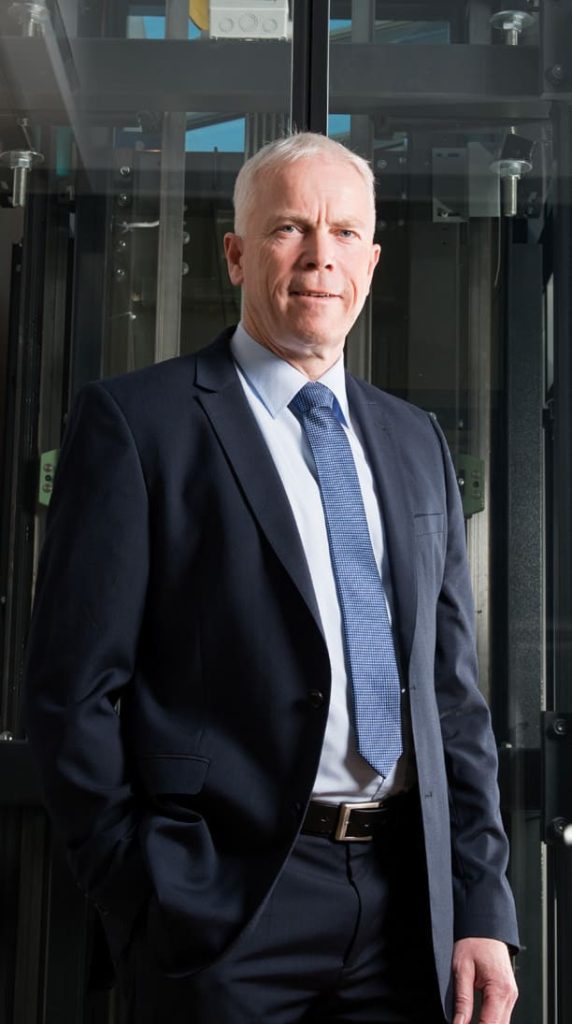
Johann Eberle, retiring after 40 years at mayr, recounted building the company's China plant in the early 2000s, noting that once deliveries began customers shifted from skepticism to orders: seeing is believing. He described China as the industry's direction, and welcomed India's slower, distinct emergence in gearless elevators under a similar local-production approach. Quality, he said, is assumed; mayr competes on delivery, responsiveness and technical detail. The ROBA-brake-checker introduced predictive maintenance customers and gave mayr a first-mover advantage. Eberle praised generational succession with Ferdinand Mayr, insisted safety must not be sacrificed for cost, and credited his teams in China and Mauerstetten for the company's success.
L'autore di questo testo ha recentemente parlato con questo veterano del settore prima del suo pensionamento.
by Sasha Göbel, EW Correspondent
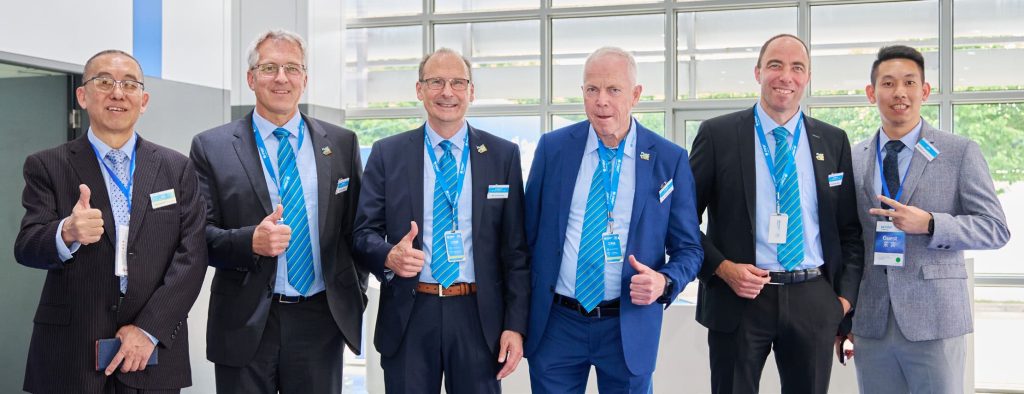
When mayr Antriebstechnik decided in the early 2000s to build its own production facility in China, multinational customers responded with something along the lines of: "Go ahead. We'll wait and see." It was only once the plant was up and running and the first brakes manufactured in China were ready for delivery that orders began to move. Johann Eberle, who was responsible for establishing that facility, summed it up plainly: "Seeing is believing."
Twenty years on, mayr supplies several Chinese elevator OEMs with locally manufactured brakes. More than 80% of applications are implemented within China. This is not one market among many — it is the direction of travel. Anyone who wants to remain relevant in the elevator industry takes their bearings from it.
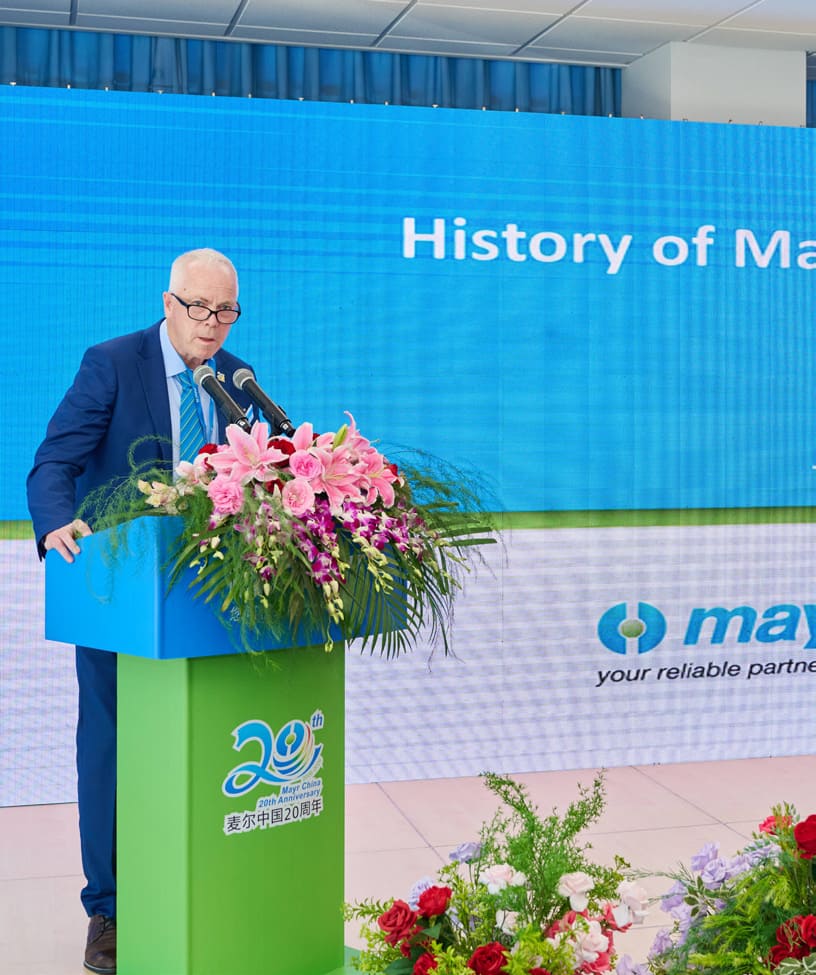
At the end of May, Eberle concluded his active career after 40 years at mayr. Before that, he took one final trip to China — to a trade fair and to visit the team he has built over two decades. That is reason enough to speak with someone who knows how drive technology has changed over 30 years — not from textbooks but from direct experience.
From Telex to Cobot
Eberle began his career in an industry where a fax machine counted as an acceleration of technology. His entry into the elevator segment at mayr coincided with a period when the world was just learning what room-less and gearless meant. Machine-room-less installations, gearless drives, belt technology — mayr spent a considerable portion of the following 20 years supplying the right brakes for these applications and proving their reliability.
India Is Not the New China
The mayr plant in India is new. Eberle attended the opening in person. On the obvious question of whether India is the new China, he answered definitively: "India is quite a fascinating development. I think we're going to have a lot of fun with that."
Only in the last five years, he said, has India started seriously thinking in the direction of gearless elevators. That is precisely where mayr is writing its next chapter. The strategy does not differ fundamentally from the China model: local production for the local market, gradual development of supplier and customer relationships. What differs is the pace. India moves differently from China.
The presence there serves two functions. First, the Indian elevator industry is strong enough to supply locally. Indian customers are reluctant to buy Chinese products, but in practice still import many components from China. Second, anyone manufacturing in Poland, Germany, China and India has a better answer to the question of what happens in the event of a production outage than a competitor with only one location.
We Don't Talk About Quality
There was a moment in the conversation that captured Eberle as a person and mayr as a company more precisely than any product catalogue. Asked whether mayr positions itself in competition through its quality label, Eberle answered without hesitation: "We don't talk about quality. We take it as a given."
For safety-critical components — and elevator brakes are that by definition — quality is not an argument; it is the entry ticket. What one actually competes on is delivery capability, response time and technological leadership in the details.
Predictive Maintenance — and the Question of Who Is at the Table
The ROBA-brake-checker, mayr's sensorless brake-monitoring system, opens up a new customer segment. Those interested in predictive maintenance were not necessarily on mayr's customer list before. "Now it's really about being the first and moving ahead as a leading company," Eberle said.
This was the rare moment in the conversation where Eberle actively claimed a competitive advantage — not on quality, which is a given, but on time. The first to market sets the rules of the game.
What Should Remain
Ferdinand Mayr, representing the fifth generation of the owning family, has been part of the management team for years. The generational transition is not something mayr still has ahead of it — it was organized over a long period of shared alignment. "It is a true stroke of luck when you have the right people in the family who are capable of running a company like this. With Ferdinand Mayr, that is certainly the case," said Eberle.
On the closing question — what should remain when one looks back on this period in 10 years' time — Eberle responded with the sentence that carried this conversation: "It would be good if safety continues to matter more than saving the last euro."
This was not the balance sheet of a sales manager complaining about the market. It was the wish of an engineer to his industry — expressed by someone who helped shape it. And, if taken seriously, a charge to the generation now taking over at mayr and elsewhere.
Eberle added a second point that matters to him and completes the picture. Without the team, he said — in China as in Mauerstetten — none of this would have been possible.
What comes after May, Eberle leaves deliberately open. Asked whether he will be seen at an Indian elevator trade fair in December, he answers without regret: “No, I’m out. But I have very good colleagues who will make it happen. I’m confident of that.”
About mayr Antriebstechnik
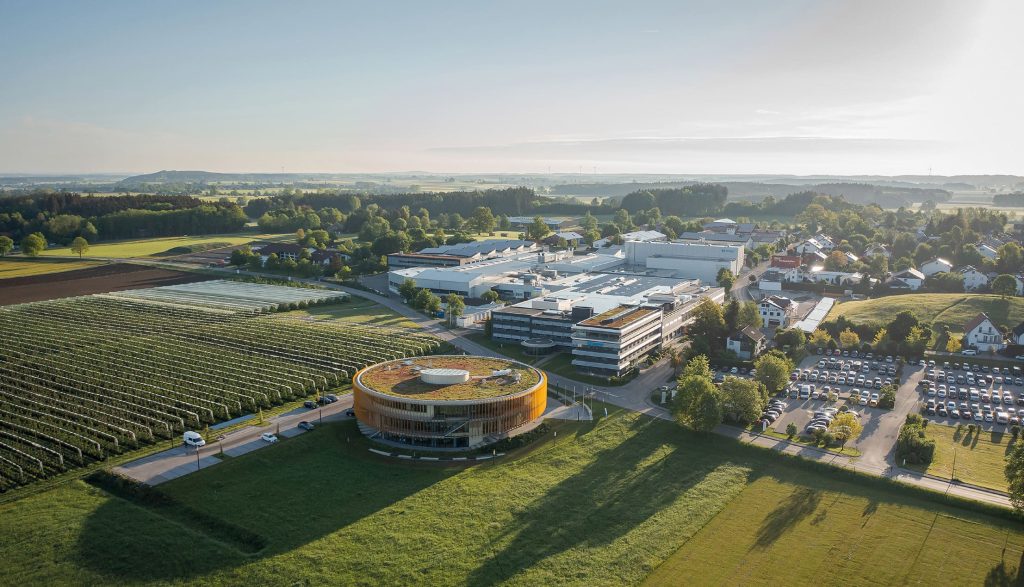
Founded in 1897, mayr Antriebstechnik is a family-owned company and a leading manufacturer of safety brakes, safety couplings and shaft couplings. These products are designed primarily for use in electrically driven machines and systems. They are found in robotics, medical technology and heavy industry, as well as in machine tools, elevators, wind turbines and stage engineering. The company is active in more than 60 industries worldwide. Approximately 750 employees work at the Allgäu headquarters in Mauerstetten, Germany; mayr Antriebstechnik has approximately 1,350 employees internationally. The company operates three additional plants in Poland, China and India. With subsidiaries in the U.S., France, the U.K., Italy, Singapore, Japan, Spain and Switzerland, as well as approximately 40 further country representatives, mayr Antriebstechnik has a global presence.
ALTRO DALLA CATEGORIA
NOTIZIE DEL GIORNO